HYROX Exercises: Every Movement, Its Standard, and Its Substitute
Published July 31st, 2026 · Updated October 8th, 2026 · Standards grounded in the official Season 26/27 rulebooks · By Geoffrey - Technology & Operations at Fit Viz
Geoffrey is also the Lead Coach at Kratos Studios, + DEKA (Mile & Atlas) + Hyrox Finisher
The HYROX exercises are eight functional movements everyone races in the same order: SkiErg, sled push, sled pull, burpee broad jumps, rowing, farmers carry, sandbag lunges, and wall balls.
Learn those eight - plus the running between them and a short list of accessory strength lifts - and you can train for the entire sport. (You'll also see the HYROX movements called "stations" - strictly, the stations are where the work happens; the HYROX exercises are what you do there.)
This guide covers every movement the way a judge sees it: the standard you must hit, the faults that cost you, the muscles doing the work, and what to substitute when your gym doesn't have the equipment.
At the bottom: the strength exercises that build your engine and the mobility and stretching work that keeps you racing.
All 8 HYROX exercises at a glance
| Exercise | Race dose | The standard (short version) | Muscles | No-gear substitute |
|---|---|---|---|---|
| SkiErg | 1,000 m | full strokes, meters don't lie | lats, triceps, core | banded pull-throughs |
| Sled Push | 50 m | sled fully across each line, your lane only | quads, glutes, calves | heavy carpet plate-push |
| Sled Pull | 50 m | hand-over-hand, stay in your box | back, biceps, grip | heavy rope/band rows |
| Burpee Broad Jumps | 80 m | chest to floor, two-foot jump forward | full body | same movement, anywhere |
| Rowing | 1,000 m | full strokes, seated finish | legs, back | none needed if you have any erg |
| Farmers Carry | 200 m | implements held at sides, controlled | grip, traps, core | dumbbell/plate carries |
| Sandbag Lunges | 100 m | back knee touches, full stand-up | quads, glutes | barbell/backpack lunges |
| Wall Balls | 100 reps | full squat, ball hits the target | legs, shoulders | thruster + max-height throw |
Race distances and the running sequence live in the stations guide; every division's loads in kg and lb are in the weights table. This page is about how to move.
The 8 HYROX exercises and their standards
1. SkiErg
A standing double-pole pull: hinge at the hips, drive the handles down with your lats, finish with your arms, stand tall and repeat. There's no rep standard to no-rep here - the meters are the judge - but there is an efficiency standard: long, complete strokes at a pace you could double.
Common fault: Arms-only pulling that torches your triceps before the sleds. Train it like technique, not like cardio.
2. Sled Push
Drive the sled down your lane, touching each end line. The judged standards are lane discipline and completing the full distance - stopping is legal, drifting into another lane is not.
Technique cue: Arms locked low on the uprights, hips down, spine long, short punchy steps.
The classic fault is a tall posture that turns the push into a treadmill of slipping feet.
3. Sled Pull
Hand-over-hand rope pull while you stay inside your marked box - stepping out or wrapping the rope is where penalties live. Hinge, lean back, and let bodyweight plus legs do the pulling; re-grip in long pulls rather than bicep-curling the rope. Protecting your grip here is the difference between a smooth farmers carry and a survival one three exercises later.
4. Burpee Broad Jumps
The most judged of the HYROX exercises: chest and thighs touch the floor, feet leave the ground together on a forward two-foot jump, and you land ready for the next rep. Step-throughs, missed chest contact, and one-footed hops draw no-reps or penalties. Find a sustainable rhythm - this movement produces the highest heart rates of the race, and ragged reps get judged hardest.
5. Rowing
Legs, then body, then arms - and the reverse on the way back up the slide. Like the SkiErg, distance is the standard; unlike almost everything else in the race, rowing rewards slowing down: a controlled stroke rate with full pressure recovers your breathing while the meters still tick.
Fault to coach out: Overpulling at 34+ strokes per minute and arriving at farmers carry with a spiked heart rate.
6. Farmers Carry
Pick up both implements and walk (running is allowed) with them controlled at your sides for the full distance. Standards are simple: keep hold, stay upright, cover the lap. Set them down before your grip fails, take three breaths, and continue - a planned break beats a dropped implement and a wrecked position. Everything you saved at the sled pull pays its dividend here.
7. Sandbag Lunges
The strictest standard of the eight: bag across the shoulders, back knee touches the floor on every rep, trailing foot must pass the lead foot, and you stand fully between reps. Half-depth lunges and shuffled steps are no-repped. Short, even steps in a straight line - this is the slowest movement in the race, and trying to speed it up with form breaks only adds penalty time.
8. Wall Balls
Full-depth squat, then throw the ball to your target - it must hit at or above the line, every rep, one hundred times. Depth and target are both judged, and late-race no-reps are the most expensive mistake in the sport. Break early and deliberately, breathe at the top, and practice to a measured target in training: standards you groove fresh are the ones that survive rep ninety.
The standards that cost racers the most time
Four faults account for most penalty and no-rep time across the field:
- 1.Shallow wall balls (depth or target misses at rep eighty, when judging feels hardest),
- 2.Stepped-through burpee broad jumps (fatigue turns jumps into lunging steps),
- 3.Lunge violations (no knee touch, or standing incompletely between reps),
- 4.and Sled-lane infringements (drifting lanes on the push, leaving the box on the pull).
None of them are strength problems - all four are standards problems, which is why practising every movement to its judged standard from week one is the cheapest speed you'll ever buy. A rep that counts at 60% effort beats a no-rep at 100%.
Practising the HYROX exercises by skill level
The same eight HYROX exercises scale from first session to podium - what changes is the emphasis.
Beginners should treat every movement as a skill first: light loads, judged standards from day one, and short quality sets (the fastest way to fail a first race is to meet the lunge standard for the first time at the race).
Intermediates add race-dose volume - full 100-rep wall-ball sets, unbroken carries - and pair movements with running so nothing is ever practised fresh.
Advanced athletes train weaknesses in compromised states and chase efficiency: stroke economy on the ergs, transition speed, pacing discipline. Wherever you are, film your reps against the standard or follow the library's video demos - form drift under fatigue is the one fault every level shares.
Sled push alternatives (and other equipment substitutes)
Most commercial gyms don't own sleds - and no substitute perfectly replicates race carpet - but you can build the same qualities. (Training the HYROX exercises at home entirely? Burpee broad jumps, walking lunges, carries with anything heavy, and wall-ball throws against an outside wall cover half the race with no equipment at all.)
- Sled push alternative: heavy plate push across carpet or turf (a towel under a plate on rubber flooring works), steep-incline treadmill "pushes" against the handrail with the belt off, leg press clusters paired with walking lunges, or wall drives for pure position work. The goal is repeatable 30–60-second efforts of heavy leg drive, not a one-rep max.
- Sled pull alternative: heavy seated rope rows, backward band-resisted walks, or looping a battle rope around a loaded plate stack and pulling hand-over-hand.
- SkiErg alternative: banded lat pull-throughs or rope slams for pattern, plus rowing intervals for the engine - the two ergs share more than they differ.
- No sandbag? Front-racked dumbbell or barbell back-rack lunges.
- No wall ball target? Thrusters plus a max-height throw against any wall, with depth judged by a box behind you.
Every substitute above has a video demonstration in the Fit Viz movement library - matching the exact standard you'll be judged against, so your training reps look like race reps.
Strength exercises that build your HYROX engine
Ask experienced racers to rank their accessory lifts and the same names keep surfacing, because they map one-to-one onto the eight movements:
- 1.Back squats and deadlifts (sled drive and hinge strength),
- 2.Walking lunges under load (the 100 m that decides the back half),
- 3.Farmer holds and carries (grip that outlasts the race),
- 4.Strict presses and push presses (wall-ball shoulders),
- 5.and Rows (SkiErg and sled-pull pulling capacity).
Two or three strength sessions a week is plenty alongside compromised running - how it all fits into a week is the free training plan's job, and single sessions built from these movements live in our HYROX workout examples.
Mobility and stretching for HYROX
The section every guide skips - and the first thing that limits new racers. Three habits cover most of it:
- 1.Before training (5–8 minutes): Ankle rocks and deep-squat holds (sled push and wall-ball depth), hip-flexor openers and world's-greatest-lunge (lunges), thoracic rotations and band pull-aparts (SkiErg, row, and overhead throws).
Prep the positions you're about to load. - 2.After training (5 minutes): Stretching beats scrolling - couch stretch for hip flexors, pigeon or figure-four for glutes, calf and lat stretches long and unhurried.
Consistency matters more than duration. - 3.Myofascial work (2–3× per week): Foam roller on quads, calves, and lats - slow passes, pausing on tender spots - plus a lacrosse ball for feet after long carry or lunge sessions.
In race week, keep mobility light and familiar: nothing new, nothing aggressive.
On race morning, your HYROX warm up should be the same 8-minute prep flow you've done before every simulation - familiar movements, rising intensity, zero experiments.
The Fit Viz library's stretching, mobility, and foam-rolling collections turn this into follow-along routines - filter by body part or by the movement you just trained.
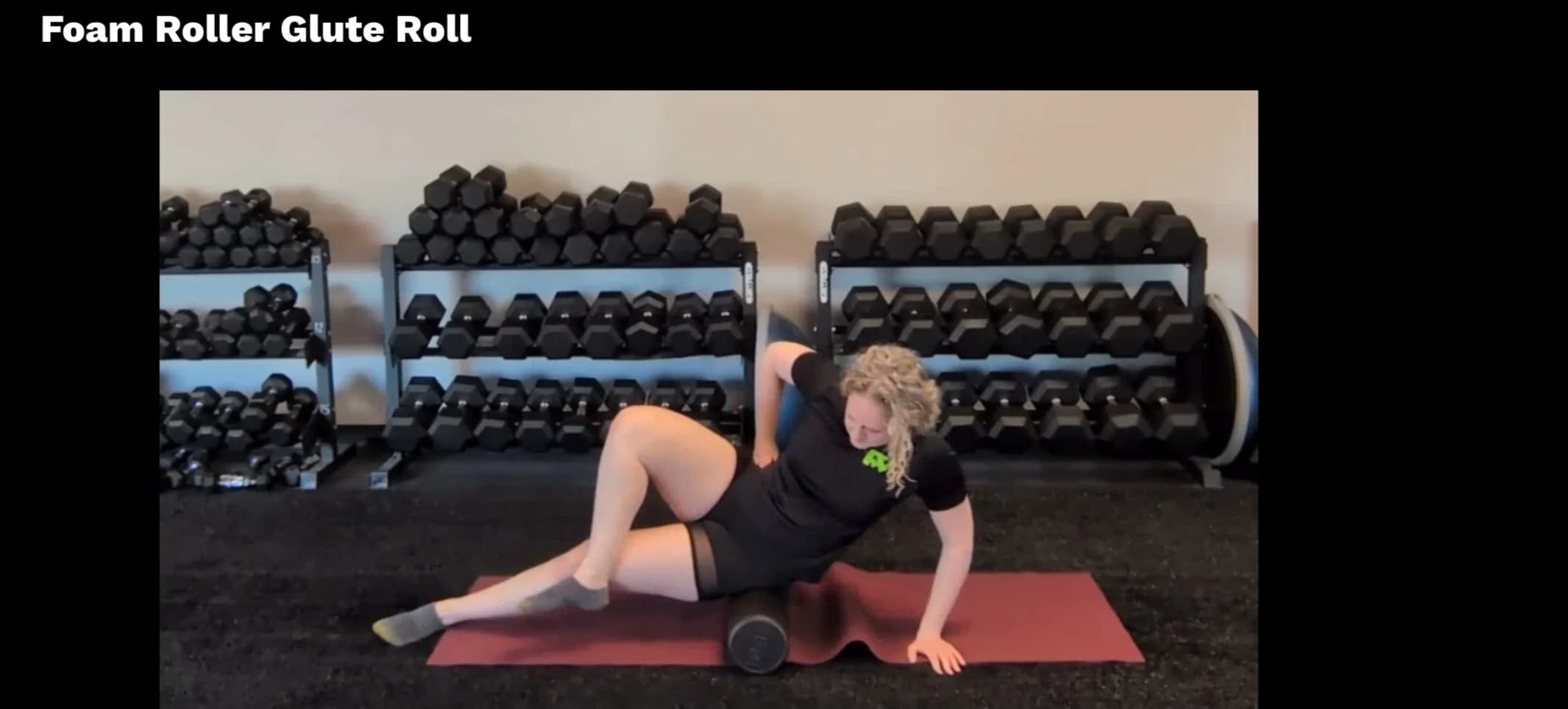
1,200+ exercise videos, one library
Reading standards is the start; seeing them is how they stick. The Fit Viz movement library holds 1,200+ exercise videos - every HYROX movement and its substitutes, plus HIIT, boxing and kickboxing, stretching, mobility, myofascial/foam-roller work, and equipment-based training, each with beginner-to-expert progressions. Every one of the HYROX movements is filmed from the angles a judge watches:
- For athletes: every exercise in your in-app plan links to its demo, filmed to the judged standard - so the rep you practice is the rep that counts.
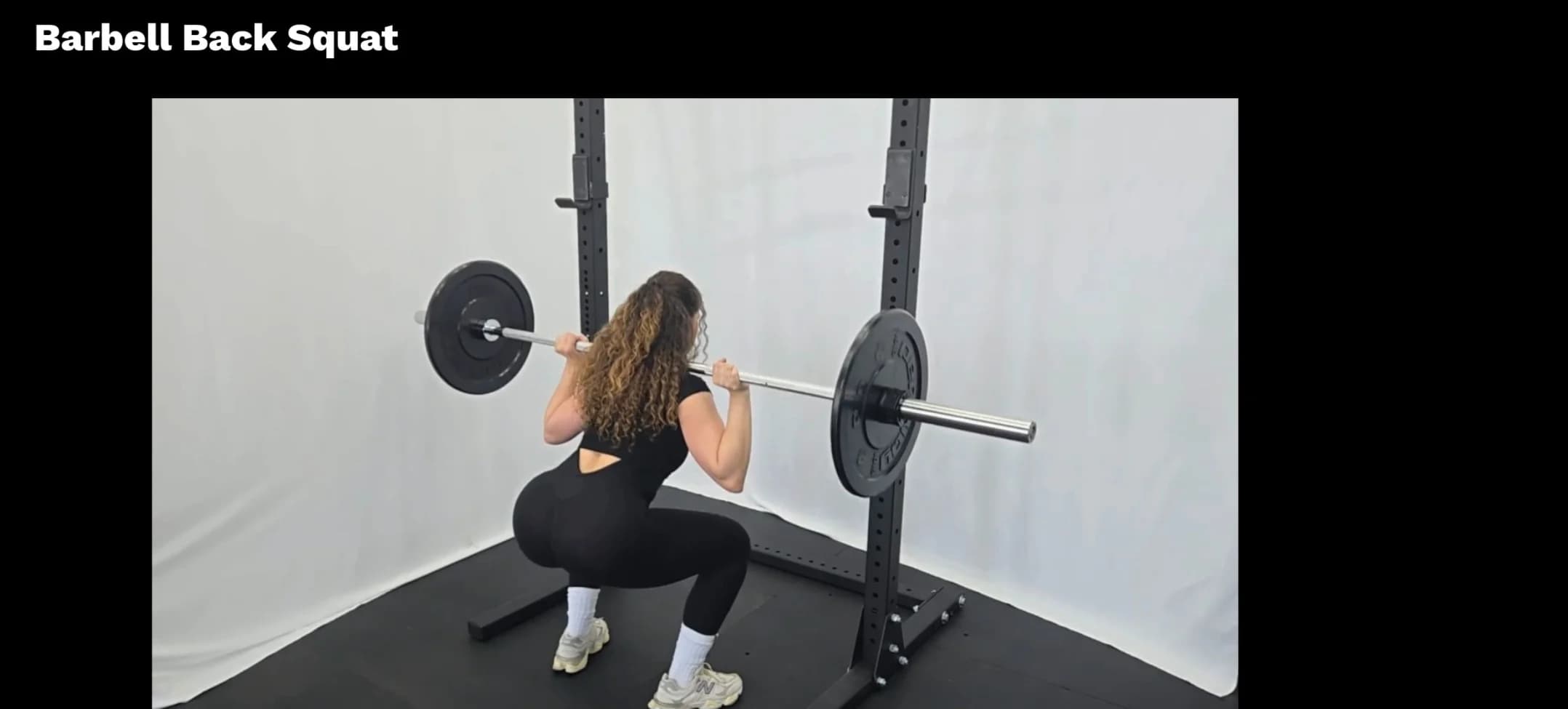
- For coaches and gyms: build classes from the library and push them to your screens - demo videos on the display, standards visible to the whole room, no more re-explaining a lunge standard between heats.
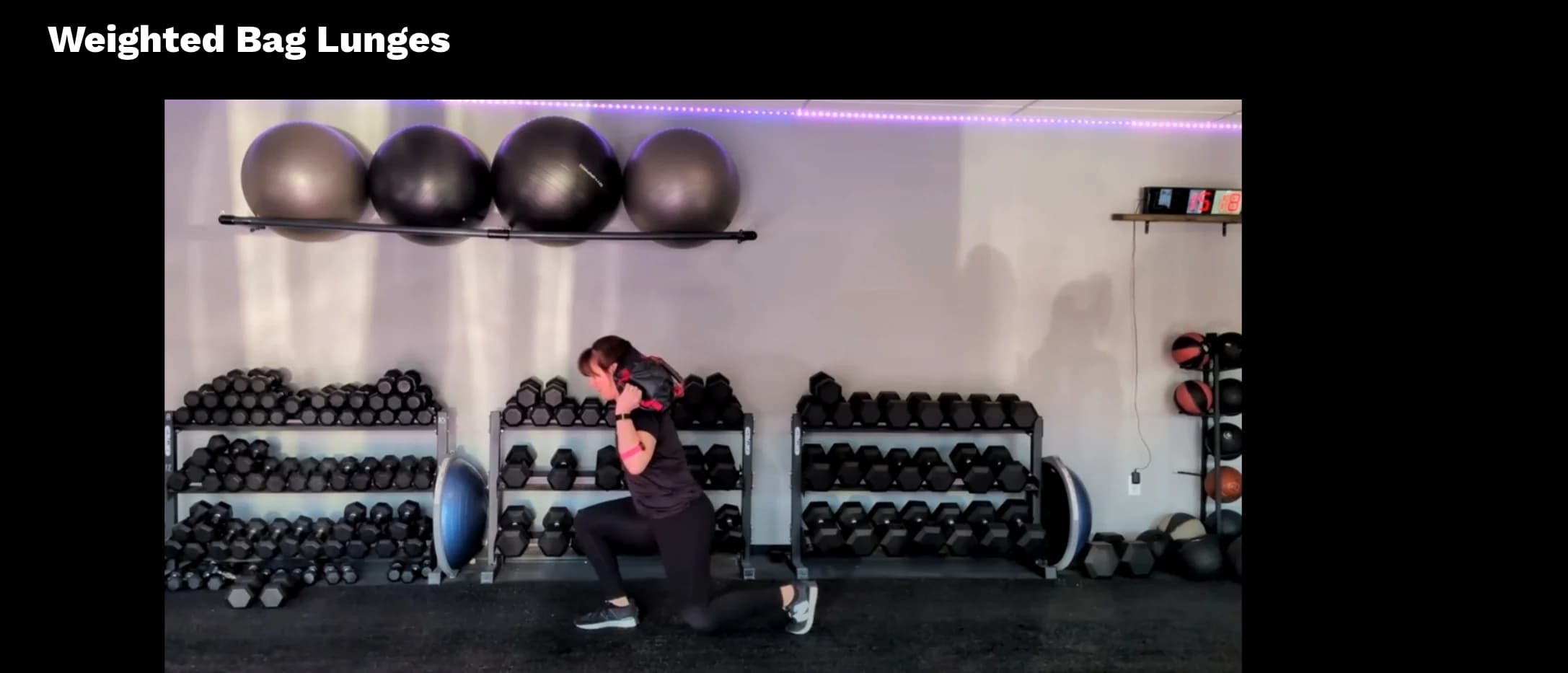
- Running HYROX-style programming for a whole facility is what our gym platform is built for.
Looking for full sessions, or the race itself?
This page is the movement reference. For complete training sessions built from these exercises, head to our HYROX workout examples; for what race day actually looks like - the sequence, the format, the Roxzone - start with the stations guide; for the full multi-week structure, the free 8 & 12-week plan.
FAQ
What are the 8 HYROX exercises?
SkiErg, sled push, sled pull, burpee broad jumps, rowing, farmers carry, sandbag lunges, and wall balls - performed in that order at every race, each preceded by a 1 km run.
What are the main HYROX workouts?
Training revolves around the eight race movements, compromised running (running on pre-fatigued legs), and accessory strength work. Complete example sessions show how they combine.
How do I practice HYROX exercises without a sled?
Use heavy plate pushes on carpet or turf, incline-treadmill drives, and leg press plus walking-lunge pairings for the push; heavy rope rows and backward band walks for the pull. No substitute matches race carpet exactly, so book a session on a real sled before race day if you can.
Is HYROX hard for beginners?
The movements are learnable by most gym-goers, and every exercise scales in training. Start at reduced loads and volumes, groove the standards early, and progress toward race standard. Our HYROX training guide covers how beginners should start.
What mobility work helps HYROX training?
Prioritize ankles and hips (squat and lunge depth), hip flexors (lunges and running), and the thoracic spine and lats (SkiErg, rowing, wall balls). Short, consistent pre-session prep and 2–3 foam-rolling sessions a week beat occasional long stretching marathons.
Do HYROX exercises have judged standards?
Yes - every station has standards in the official rulebooks: chest-to-floor and two-foot jumps on burpee broad jumps, knee-touch and full stand-up on lunges, squat depth and target contact on wall balls, lane and box rules on the sleds. Penalties and no-reps make standards practice a direct time investment.
Related:
Complete example sessions show how compromised running (running on pre-fatigued legs) and accessory strength work combine.
Part of the:
Independent guide - not affiliated with HYROX GmbH. Standards grounded in the official Season 26/27 rulebooks; re-verified each season.