Heart Rate Zones: The Complete Guide to HR Zone Training (Including Zone 2) for Group Fitness
Heart rate zones make workout intensity simple to understand, easy to coach, and repeatable across every fitness level. In this guide to heart rate zones, HR zone training, and zone 2 training, you'll learn what each zone does, how to use it for better pacing and performance, and how to avoid the common "always kind of hard" trap. For gym operators, zones are more than a metric — they're a system: when effort becomes visible and shared in class, coaching gets cleaner, workouts feel more premium, and engagement rises.
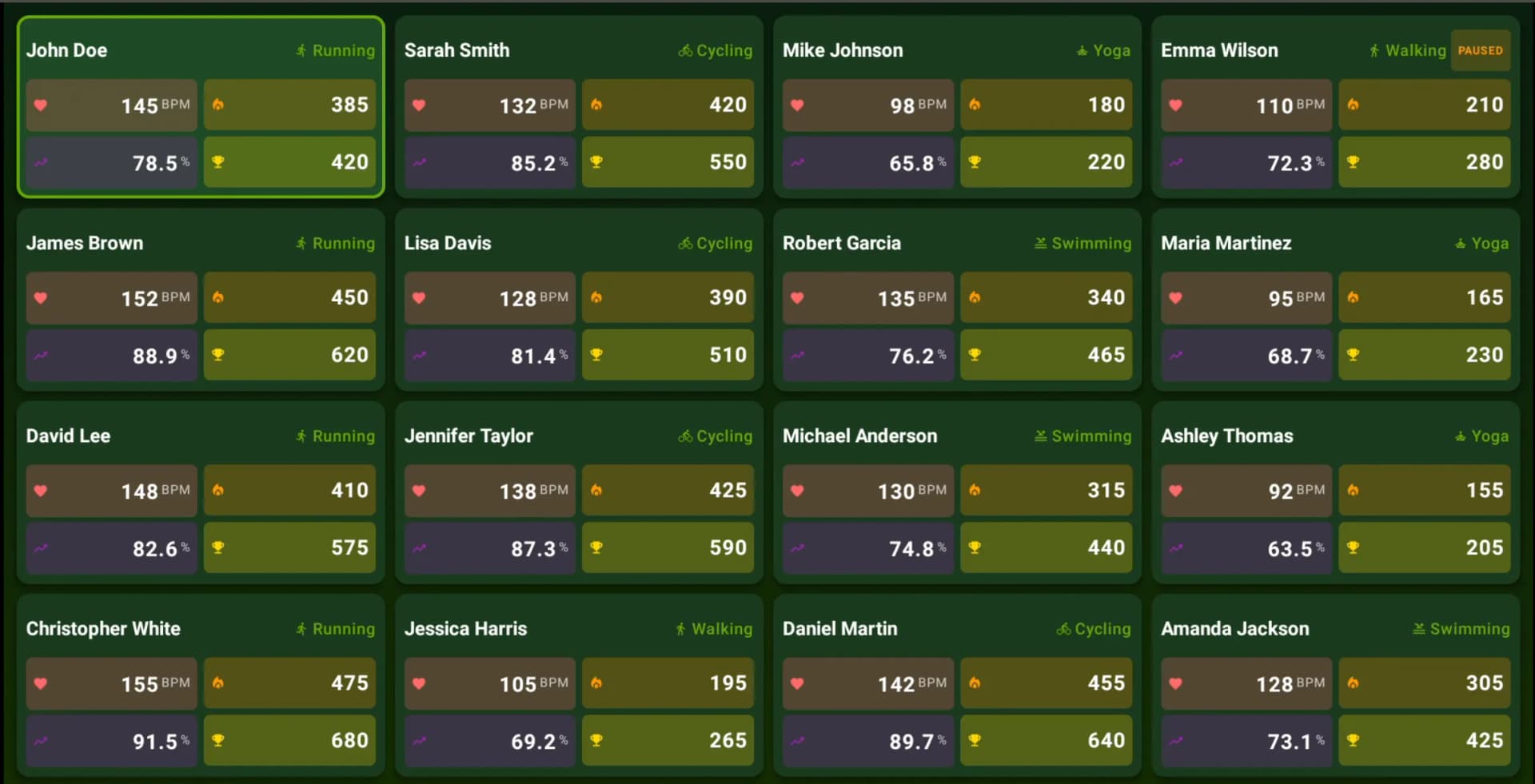
In a gym setting, heart rate zones become even more powerful when they're visible. A heart rate zone display (or gym heart rate screen) turns intensity into something athletes can see in real time — making classes safer, more inclusive, and easier to coach at scale. Fit Viz's ecosystem is built around that "training intensity + performance display" layer, while connecting the experience back to scheduling/booking and workout displays.
Turn Heart Rate Zones Into Member Motivation
Heart rate zones are powerful — but they work best when members can see and understand their effort. Fit Viz helps gyms turn HR zone training into an engaging class experience that builds consistency, creates shared energy, and keeps members coming back.
What Are Heart Rate Zones?
Heart rate zones are intensity ranges that categorize how hard your cardiovascular system is working during exercise. Most systems use a five-zone model where each zone is defined as a percentage of your maximum heart rate (HRmax).
A simple way to think about zones:
The key advantage is personalization: two people can do very different workloads (speed, weight, resistance), but land in similar zones — meaning they're training at comparable internal effort. That's why zones are so effective in mixed-ability group classes.
Why HR Zone Training Works (And What It Changes)
A well-coached program doesn't ask members to "go hard" every day. It rotates stimulus intelligently:
Heart rate zones make this visible and measurable, which helps in three ways:
Better targeting (train the right system)
Zone-based workouts make it much easier to match intensity to the session goal - especially when the gym environment pushes people to compete too early.
Better pacing (less burnout, more consistency)
When members learn what Zone 2 actually feels like, they stop living in the "always moderate, always tired" middle - and consistency improves.
Better coaching at scale (especially in group fitness)
When intensity is displayed, coaches can manage the room faster and athletes can self-regulate without constant 1:1 correction. Fit Viz's "performance screen" concept is built around this: effort becomes objective and visible, not just perceived.
How to Calculate Your Heart Rate Zones
There are three common approaches — ranked from simplest to most accurate.
Quick estimate (good for beginners)
Many zone systems start with estimating maximum heart rate as:
220 − age = estimated HRmaxThen zones are calculated as percentages of that HRmax. This is easy and often "good enough" to start learning pacing.
Heart rate reserve (better personalization)
Heart Rate Reserve (HRR) methods use both resting HR and max HR to set zones more precisely. Cleveland Clinic notes HRR/Karvonen can give more individualized targets than the basic formula.
Lab/field testing (best accuracy)
The most accurate max HR and thresholds come from testing (e.g., stress tests / VO2 max tests).
Practical guidance: In gyms, the goal isn't perfect physiology — it's consistent coaching language. Start with simple zones, then refine for regular athletes over time.
The 5 Heart Rate Zones Explained (Zone 1 – 5)
Most five-zone models look like this (as % of HRmax).
| Zone | % HRmax | What it feels like | Primary purpose |
|---|---|---|---|
| Zone 1 | 50 - 60% | Very easy | Warm-up, recovery |
| Zone 2 | 60 - 70% | Easy, steady | Aerobic base, endurance |
| Zone 3 | 70 - 80% | "Comfortably hard" | Tempo, sustained conditioning |
| Zone 4 | 80 - 90% | Hard, limited talking | Threshold work, intervals |
| Zone 5 | 90 - 100% | Near-max | Short bursts, VO2-style efforts |
Now let's translate those into how you coach them in the real world.
Zone 1 (50 – 60%): Warm-up + recovery
Use it for: warm-ups, cool-downs, skill work, recovery days.
Coaching cues: full conversation, nasal breathing possible, low strain.
Gym win: teaches members that "easy" is not "wasted."
Zone 2 (60 – 70%): Aerobic base + endurance
Use it for: long steady pieces, low-impact conditioning, base building, regeneration days.
Coaching cues: can talk in sentences, steady breathing, "I could keep this up."
Gym win: this is the zone most gyms under-train — yet it's foundational.
Zone 2 Training: What It Is, Why It Matters, and How to Do It Right
Zone 2 training is steady aerobic work performed below (or near the upper edge of) your aerobic threshold — the intensity where lactate begins to rise more meaningfully. TrainingPeaks describes aerobic base work as holding a pace just below the aerobic threshold (often aligned with the top of Zone 2).
Why Zone 2 is so popular right now
Zone 2 is having a moment because it solves a common problem: many recreational athletes spend too much time in "kind of hard" intensity — hard enough to create fatigue, not targeted enough to create the best adaptation. Zone 2 shifts the focus to:
- Building aerobic capacity
- Improving efficiency and durability
- Accumulating more training volume with less recovery cost
How to know you're actually in Zone 2
A practical checklist:
- Talk test: you can speak in full sentences without gasping
- Breathing: controlled, steady
- Sustainability: you could hold it a long time without a spike in perceived effort
(Heat, dehydration, caffeine, poor sleep, and stress can all shift heart rate — so don't obsess over single-day precision.)
Zone 2 in group fitness (yes, it works)
Zone 2 doesn't have to mean "boring treadmill time." In group training, Zone 2 can be:
- Long partner circuits with controlled output
- Technique-focused mixed modality (row/bike + light strength)
- Sustained "engine" blocks with capped intensity
- Incline walking + carries + easy core work
The gym magic happens when Zone 2 becomes a coached skill, not just a cardio setting.
HR Zone Training by Goal
Heart rate zones become most useful when members understand the "why" of each session. Here are clear, gym-friendly prescriptions.
If the goal is fat loss and general health
Lower-intensity work (Zones 1 – 3) is commonly recommended as sustainable cardiovascular training, and Cleveland Clinic notes lower zones are often associated with greater fat use during lower-intensity activity.
Practical program mix (gym-friendly):
- 2 – 4 sessions/week with meaningful Zone 2 time
- 1 – 2 interval days (brief Zone 4/5 exposures)
- Daily movement (walks, easy cardio) to increase consistency
If the goal is endurance and conditioning
This is where Zone 2 shines — build the base, then add higher intensity strategically.
Gym structure example:
- 1 long steady Zone 2 block weekly
- 1 tempo/threshold day (Zone 3 – 4 intervals)
- 1 shorter high-intensity day (Zone 4 – 5 intervals)
- Everything else stays easy/moderate
If the goal is HIIT performance
HIIT is not "go hard the whole class." It's a structured oscillation between hard and easy.
Coach it as:
- Short pushes in Zone 4 – 5
- Intentional recovery to Zone 1 – 2
- Repeat
A heart rate zone display makes this dramatically easier: members can see whether they recovered enough to hit the next rep properly.
If the goal is strength + power (without gassing out)
Heart rate zones still matter. Strength days can accidentally become conditioning days if rests are too short.
Use zones to protect intent:
- Keep most lifting in Zone 1 – 2
- Let conditioning blocks drive Zone 3 – 5
Heart Rate Zones in Group Fitness: Coaching Cues, Safety, and Class Design
A good group class has two jobs:
Heart rate zones help you do both — especially when displayed visually. Fit Viz's heart rate education content emphasizes that zones help athletes train intentionally (not by guesswork) and that shared displays can make mixed fitness levels feel more equal because effort is measured internally.
The coaching language that makes zones "stick"
Avoid jargon. Use simple anchors:
- Zone 2: "Could keep this going. Nose breathing is possible. Talk in sentences."
- Zone 3: "Comfortably hard. You're working, but not redlining."
- Zone 4: "Short phrases only. You're pushing."
- Zone 5: "All-out. Brief."
Then teach members what recovery looks like: "Your job is to bring your heart rate down before the next push."
Safety: zones reduce "ego pacing"
The fastest athlete and newest athlete often chase the same external target (speed/weight). Zones reframe success as "hit the right intensity for your body." This matters most when you're coaching:
- Beginners
- Post-injury members
- Deconditioned members
- High-stress populations who over-redline
A Simple 3-Part Class Template (Zones-First)
1. Warm-up (Zone 1 – 2):
Build gradually, include mobility
2. Main work:
Choose one "hero zone" (2, 3, or 4/5)
3. Finish + downshift:
Brief intensity (optional) then cooldown in Zone 1
The "No Gray Zone" Conditioning Day (Popular for a Reason)
If your gym culture tends to drift to Zone 3 every day, try this weekly reset:
Lots of Zone 2
Aerobic base time
Short, sharp Zone 4/5
Burst intervals
Recovery to Zone 1/2
Intentional rest
It feels easier and performs better long-term because it respects adaptation and recovery.
Want Zone Training to Work in Real Classes? Put It on the Screen
Most members can't manage zones consistently without visibility. Fit Viz turns your TVs into workout screens that support coached training — so workout flow, timing, and intensity guidance stay clear from warm-up to finish.
Fit Viz connects engagement with the operational layer too — linking booking, billing, and rosters to the in-gym experience through one platform. Booking + scheduling
Heart Rate Tracking in Group Fitness: Devices, Accuracy, and Troubleshooting
If your zone training is going to be credible, the data has to be stable.
Chest strap vs armband vs watch
Fit Viz's HR monitor guide calls chest straps the "gold standard" and explains that placement and fit are critical — because bad placement creates lag, spikes, dropouts, and inaccurate zones.
Further reading: Garmin Fitness Tracker Comparison 2025 — which Garmin model fits your training style, and how Fit Viz turns wrist-based HR data into live zone displays on gym screens.
Quick fixes for the most common problems
When readings aren't right, try these quick adjustments:
- If readings lag: tighten strap/armband, ensure proper contact
- If readings spike: moisten electrodes (chest strap), adjust placement, check strap movement
- If readings drop: reposition sensor away from bone, ensure snug fit, consider switching device type
For deeper insights, read our article on how to wear a heart rate monitor
"Instant connection" matters in a busy class
In group fitness, friction kills adoption. Fit Viz's HR monitor guide describes systems that detect signals automatically (e.g., ANT+ / Bluetooth) so members don't need manual pairing or app navigation when they walk in.
Heart Rate Zone Display: What to Show on a Gym Heart Rate Screen
A gym heart rate screen should be designed for coaching first — not tech demos.
1. Show only the metrics that change behavior
The highest-value elements in a group class:
- Name (or nickname)
- Heart rate (BPM)
- Current zone (color + label)
- Simple intensity indicator (optional)
Fit Viz describes the "performance screen" as a motivator and an equalizer where effort is objective and visible.
2. Build the screen around coaching moments
Your screen should answer:
- Who is redlining?
- Who isn't warm yet?
- Who recovered enough for the next push?
3. Make "downshifting" visible
The most overlooked benefit of zone displays: they teach recovery. Members learn:
- "I need to come down to Zone 2 before the next round."
- "If I stay in Zone 4 the entire workout, I'm not doing intervals - I'm just surviving."
4. Use displays to improve inclusion
When effort is visible, scaling becomes easier:
- Advanced athlete increases output to reach Zone 3
- Beginner reduces output to stay in Zone 2 - 3
- Both succeed.
That's one of the core reasons heart rate displays work so well in group settings.
How Fit Viz Supports Heart Rate Zone Training (and Links to Displays + Booking)
This Support Hub page is meant to "own" training intensity + performance display, and connect it to your other pillars.
- DISPLAYS
- Fit Viz's workout display system is designed to replace whiteboards and reduce repeated explanations by turning TVs/tablets into clear workout guidance. When you add heart rate screens into that same environment, you get a cleaner class experience: the workout is visible, timing is visible, intensity is visible.
- BOOKING
- Fit Viz positions scheduling as more than a calendar: booking data can extend into the gym floor experience — welcome screens, roster visibility, and the performance layer. Fit Viz's scheduling guide describes a flow where booking/check-in connects into in-gym systems (including heart-rate monitoring) so classes run smoother.
- ENGAGEMENT
- Displays aren't just operational — they're motivational. Fit Viz's workout screens use data (including HR monitor data) for recognition and engagement.
- ALL-IN-ONE
- Fit Viz is a unified, visual-first platform that centralizes multiple layers (scheduling, workout displays, timers, heart-rate monitoring, fitness on demand etc.).
Frequently Asked Questions
They’re ranges of exercise intensity based on percentages of your maximum heart rate, commonly organized into 5 zones.
Steady aerobic training typically performed below the aerobic threshold — often aligned with the upper end of Zone 2 — used to build aerobic capacity and durability.
A common starting point is estimating max HR as 220 − age, then applying zone percentages. More accurate approaches use HRR (Karvonen) or testing.
They’re useful, but not perfect — hydration, heat, stress, sleep, and device quality can shift readings. Use heart rate alongside perceived effort and breathing for best results.
Chest straps are often considered the most accurate; correct placement and fit are essential for reliable data.
Related Fit Viz Articles/Posts
HR Fundamentals
- Heart Rate Zones Explained - definitions + zone meanings
- How to Calculate Heart Rate Zones (new) - HRmax vs HRR vs testing
- Heart Rate Zones vs RPE (new) - "how hard should this feel?"
- Garmin Fitness Tracker Comparison - how Fit Viz displays Garmin heart-rate data on gym screens for next-level engagement
- Fitness On Demand Platform Guide - transforms on-demand fitness into an interactive, data-driven experience
- Hyrox Workout: Training and Preparation with Heart Rate Zones
Zone 2 & Group Fitness
- Zone 2 Training for Busy People (new) - practical weekly templates
- Zone 2 for Group Fitness Programming (new) - how to run it without boredom
- Gym Heart Rate Screen Setup Guide (new) - what to display + coaching flow
- Heart Rate Tracking in Group Fitness (new) - adoption, culture, buy-in
- Member Retention: Why Clarity Beats Motivation Alone
- Workout Templates: How to Build a Weekly Workout Routine That Scales
Hardware & Accuracy
Display & Screens
- Gym Display Systems - What are gym displays?
- Workout Display System - What makes up a gym Display system?
- Digital Gym Chart Features - What to look for in digital gym displays
- Engagement With Workout Screens - How can members be engaged using workout screens
- DEKA vs MURPH Challenge: Which Test of Fitness Is for You?
- Workout Stations: How to Run Station-Based Training Without Confusion
- AMRAP, EMOM, and Tabata: Which Workout Format Is Best?
- Obstacle Race Explained: Spartan Race vs Hyrox
- Gym Tech Stack: Workout Screens, Heart Rate Zones, and Class Scheduling
Booking & Operations
- Booking Software For Gyms - Essentials of a booking software
- Scheduling Software For Fitness Classes - must-have features, hidden pitfalls, and modern solutions
- Fitness Scheduling Software Comparison - top fitness softwares
- Gym Software Stack - What makes up a complete gym software solution?
- Gym Billing Software - what modern Gym Billing Software should include
- Gym Member Management Software Comparison
- ACE Group Fitness Certification: Guide for Instructors and Modern Gyms
- Group Fitness App Comparison: Top 10 Options Your Members Use
- Personal Training Software Buyer's Guide
Ready to Make Heart Rate Zones Visible?
Turn your gym screens into a coaching tool that makes intensity visible, pacing easier, and every class more inclusive. Fit Viz makes it simple.