Workout Templates: How to Build a Weekly Workout Routine That Scales
Learn how to build a weekly Workout Template and Workout Routine that scales for all fitness levels. Discover how Fit Viz lets gyms create master workout templates, push programming to screens instantly, run inbuilt workout timers for class flow, and support scalable intensity with optional heart rate zones.
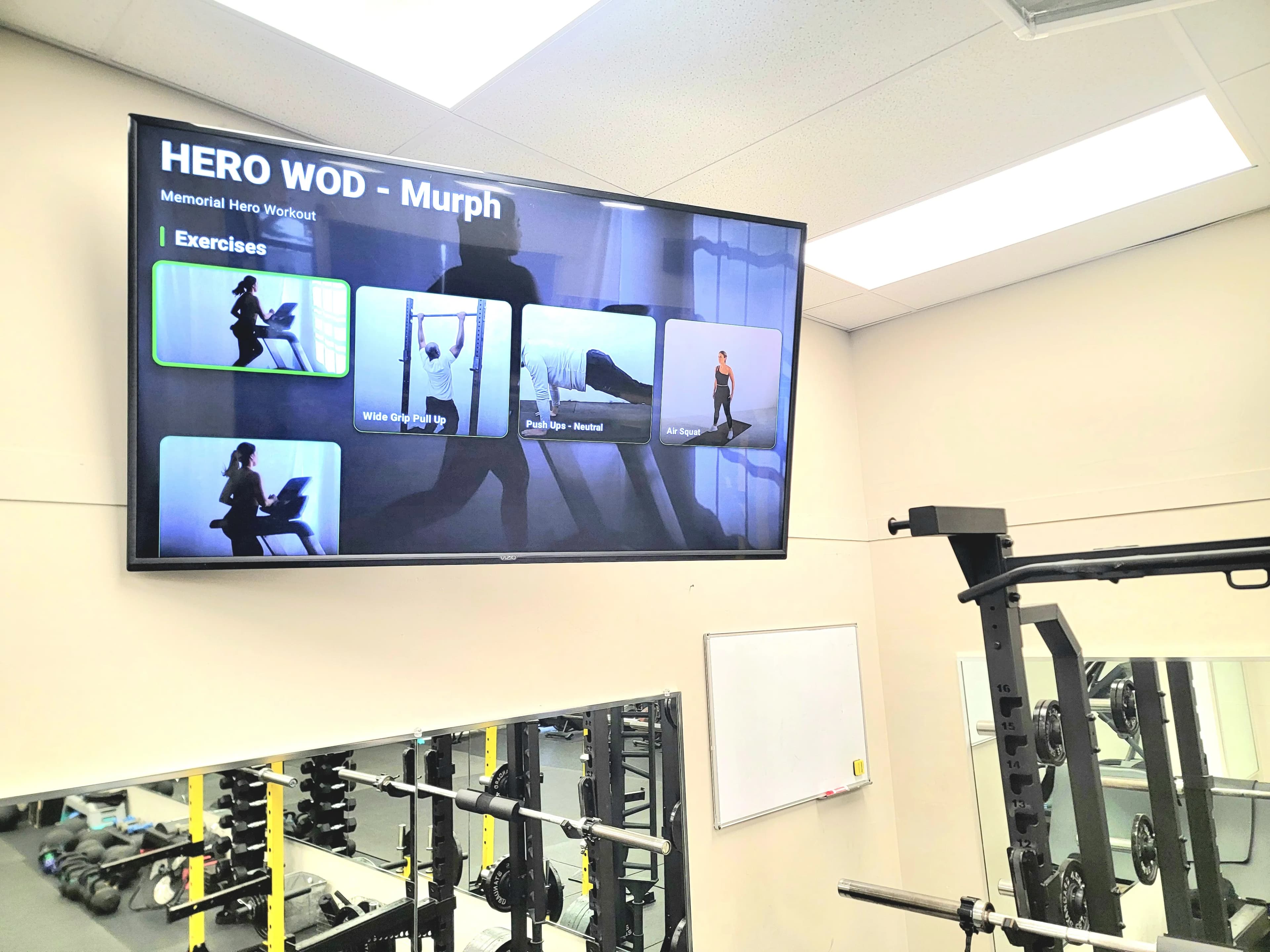
Efficiency in programming comes from a strong Workout Template. The more your gym grows, the more you feel it: multiple coaches, multiple class times, mixed ability levels, and members who expect consistency. A great Workout Routine shouldn’t depend on who’s coaching at 6am versus 6pm. It should be repeatable, scalable, and easy to deliver.
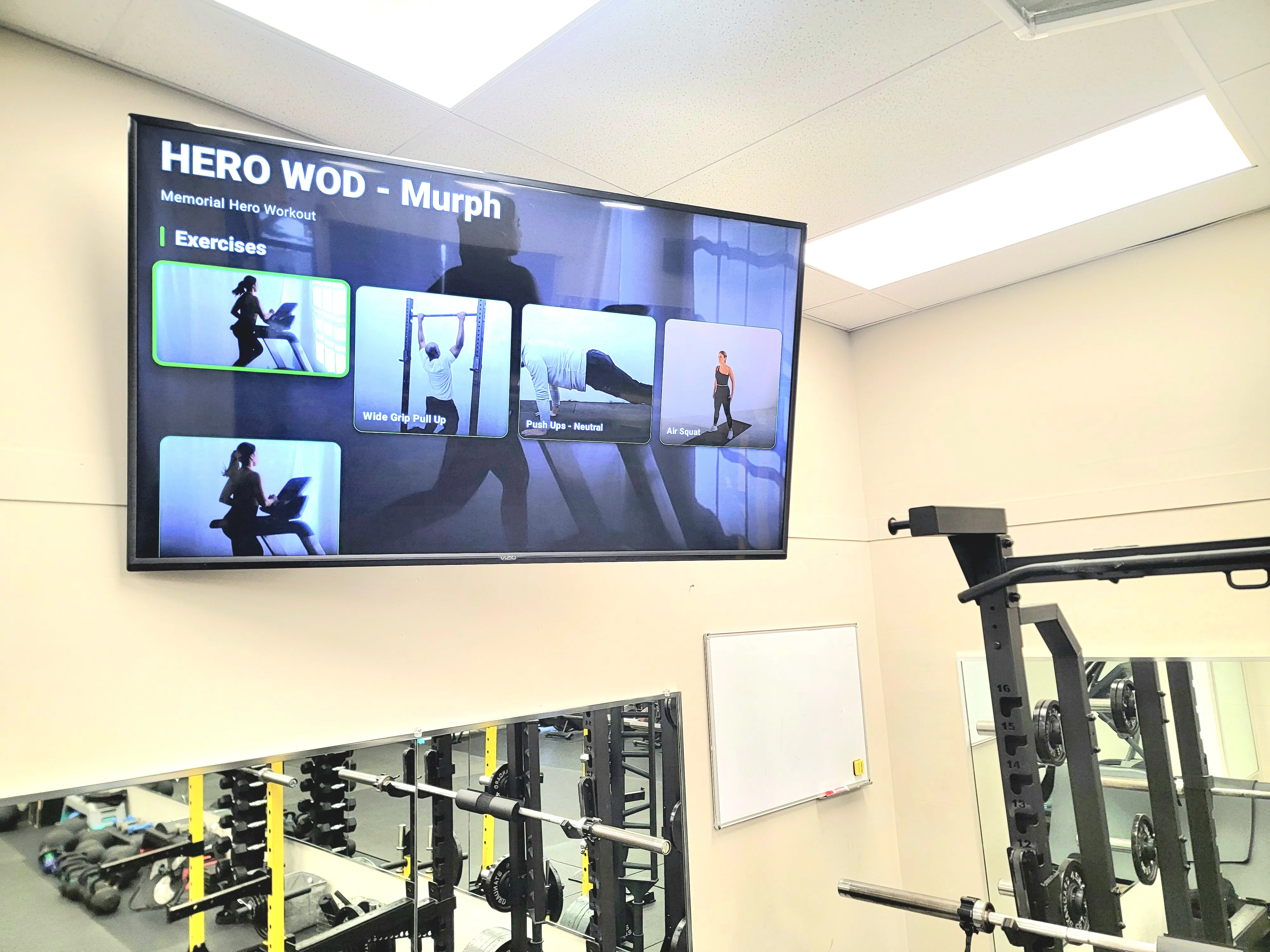
That’s the real value of workout templates: they turn programming into a system. When your team has a master template and a predictable weekly structure, you reduce staff confusion, improve member confidence, and protect your brand experience.
This article will expand on:
- Scalable weekly template design
- Consistent delivery across coaches using Fit Viz
- In-gym workout display + timers for execution
- Progress and engagement through heart rate zones (optional) for mixed abilities.
Why a Workout Template beats “writing workouts daily”
Many gyms program in a reactive way: the workout is decided, written, and explained day by day. That works at a small scale. But as you add members and class times, it creates predictable problems:
- Inconsistent warm-up and class flow
- Coaches format workouts differently
- Scaling guidance varies by instructor
- Classes run late due to unclear timing
- New members feel lost because structure changes daily
- Staff spends time rewriting workouts instead of coaching
A weekly Workout Template fixes this by giving every class a consistent “skeleton” that you can customize with different movements, loads, and themes.
What a scalable weekly Workout Template includes
A strong Workout Template has two components:
- Structure: the repeatable framework that stays consistent each day
- Content: the movements and prescriptions that rotate week to week
When structure is consistent, delivery is consistent. And that’s what makes the Workout Routine scalable.
The “class skeleton” template (works for most gyms)
A universal class template often looks like:
- Warm-up block (movement prep + breathing + activation)
- Skill/strength block (main lift or technique focus)
- Conditioning block (metcon, intervals, stations)
- Accessory block (hypertrophy, stability, unilateral work)
- Cooldown block (breath, mobility, recovery)
This layout scales across modalities and keeps members oriented.
How to design a weekly Workout Routine that scales for all levels
The biggest challenge is not creating hard workouts. It’s creating workouts that work for:
- Beginners
- Intermediates
- Advanced athletes
In the same session
A scalable weekly Workout Routine uses tiers.
Use tiered prescriptions (Rx + scaling tiers)
Your Workout Template should include:
- Rx (as prescribed)
- Intermediate (slightly reduced load or skill)
- Beginner (simplified movement pattern or reduced volume)
- Masters (as needed - volume/load adjusted while preserving stimulus)
The rule: scaling should preserve the stimulus, not just reduce difficulty.
Keep the time domain consistent
One of the easiest ways to make a Workout Routine scalable is to keep the work window the same and adjust:
- Loads
- Movement complexity
- Rep counts
This prevents the class from fragmenting into different timelines.
Standardize pacing and intent
A great template includes coaching intent:
- “This should feel like controlled Zone 3–4 effort”
- “You should complete rounds in 2:00–2:30”
- “Aim for unbroken sets until minute 6”
When athletes know what the workout should feel like, they self-regulate better.
The most overlooked part: executing the Workout Template in the room
Even a perfect Workout Template fails if execution is messy. Most gyms lose time and clarity because:
- Workouts are written on a whiteboard differently every day
- Timers are managed separately with a remote or phone
- Athletes can’t see the flow from where they stand
- Coaches repeat instructions instead of coaching movement
This is where Fit Viz becomes an operational advantage.
Fit Viz: build a master Workout Template and deliver it consistently
Fit Viz is designed to help facilities protect programming integrity and improve class execution.
1. Build and reuse a master Workout Template
Instead of reinventing the wheel every day, Fit Viz supports template-driven programming so you can:
- Build a weekly structure once
- Reuse blocks and formats
- Swap movements while keeping flow consistent
- Standardize how workouts are presented
This reduces programming overhead and improves consistency.
2. Push the Workout Routine to all screens instantly
This is the core benefit from your text: Fit Viz turns your Workout Template into a shared source of truth.
When you push programming to screens:
- Every coach delivers the same structure
- Workouts are formatted consistently
- Members know what to expect
- Your brand experience stays intact across class times
You stop relying on handwriting and memory. The room runs on the system.
Fit Viz workout display + inbuilt workout timers (how templates become effortless)
A weekly template only works if the class flow is tight. Fit Viz supports that by combining:
Workout display for visual guidance
Members can see:
- Current block and what’s next
- Station layouts or movement sequences
- Scaling tiers side-by-side
- Standards and notes when needed
This reduces “what are we doing?” interruptions.
Inbuilt workout timers that run the class
Instead of a separate wall clock, Fit Viz runs timers as part of the Workout Routine:
- EMOM, AMRAP, Tabata, intervals
- Work/rest transitions
- Rest and rotate station cues
- Visible countdowns
The coach presses start and the class stays synchronized. Less admin. More coaching.
Optional but powerful: Use heart rate zones to scale intensity automatically
Scalable programming isn’t just about weights and reps. It’s also about intensity. Heart rate zones make intensity coachable at scale.
Fit Viz can display heart rate zones on screens so:
- Beginners and athletes can train at the same relative effort
- Coaches can cue pacing objectively
- Safety improves when someone stays too long at max effort
- Engagement improves with effort-based challenges
This supports a Workout Routine that works for everyone - not just the most fit people in the room.
A practical weekly Workout Template example (simple, scalable, repeatable)
Here’s a sample structure you can reuse weekly while rotating movements:
Day 1: Strength + Short Conditioning
- Strength: Squat pattern
- Conditioning: 8–12 minute interval block
Day 2: Engine + Skill
- Skill: Gymnastics or technical lift
- Conditioning: Longer aerobic interval (Zone 2–3 focus)
Day 3: Power + Mixed Modal
- Strength: Pull + hinge
- Conditioning: 12–18 minute mixed modal circuit
Day 4: Hypertrophy + Capacity
- Accessory: Upper/lower split
- Conditioning: Station-based “rest and rotate” circuit
Day 5: Benchmark / Community Day
- Repeatable format (weekly leaderboard or time cap test)
- Clear scaling tiers to maximize participation
Fit Viz helps maintain this structure across every coach and class time by displaying the workout blocks and running the timers automatically.
Conclusion
A scalable weekly Workout Template is the fastest way to improve programming consistency, coach confidence, and member retention. A great Workout Routine isn’t just a list of movements - it’s a repeatable structure that supports mixed abilities and runs smoothly in the room.
Fit Viz makes template-driven programming easier to execute by letting you build a master Workout Template and push it to all screens instantly. With workout displays, inbuilt timers, and optional heart rate zone visibility, Fit Viz turns your programming into a consistent, premium class experience - no matter which coach is on the floor.