Obstacle Race Explained: Spartan Race vs Hyrox
Spartan Race vs Hyrox: learn the key differences between outdoor Obstacle Race training and standardized indoor fitness racing. Discover how Fit Viz helps gyms run Hyrox and Spartan Race simulations with station timers, workout displays, looping video demos, and heart rate zones for race-ready pacing and form.
Competitive fitness has split into two clear camps: the mud-and-grit Obstacle Race world and the rise of standardized indoor fitness racing. If you’re deciding between a Spartan Race and Hyrox, you’re not just choosing an event, you're choosing a training focus.
- Spartan Race is the king of the outdoor obstacle race: unpredictable terrain, heavy carries, and technical obstacles like rope climbs and spear throws.
- Hyrox is the indoor “fitness race” format: fully standardized, repeatable, and measurable 1km run + functional station, repeated 8 times.
For gyms, this shift creates a major opportunity. Facilities are no longer only “class gyms.” They’re becoming training centers for race-specific performance. The gyms that win are the ones that can run repeatable simulations, manage stations cleanly, and give athletes the structure they need to train like competitors.
In today’s article we will expand on:
- Standardized Hyrox vs unpredictable Spartan Race training needs
- Station-based race simulations using timers and workout displays
- Movement quality and competition standards through video demos and heart rate pacing
Spartan Race vs Hyrox: what each race actually demands
Spartan Race: obstacle race performance in the real world
A Spartan Race is an outdoor Obstacle Race where variables change constantly:
- Terrain (hills, mud, sand, uneven trails)
- Weather conditions
- Obstacle execution under fatigue
- Grip endurance and upper-body pulling
- Heavy carries and awkward objects
Spartan success is not purely about speed. It’s about handling the unknown while maintaining composure and grip strength.
Key training qualities for Spartan Race:
- Trail running and hill endurance
- Grip strength (hanging, rope work, carries)
- Obstacle skill practice (climbs, crawls, throws)
- Strength endurance under awkward loads
- Recovery pacing between obstacles
Hyrox: standardized racing where execution wins
Hyrox is the opposite. It’s designed to be repeatable and measurable:
- Indoor environment
- Fixed format: 1km run + station × 8
- Stations repeat across events
- Performance is easier to compare across time because variables are controlled
Hyrox rewards athletes who can maintain consistent output, transition efficiently, and manage fatigue across repeated cycles.
Key training qualities for Hyrox:
- Compromised running (run hard after leg fatigue)
- Station efficiency (fast setup, repeatable breaks)
- Pacing discipline (avoid redlining early)
- Functional power (sled, burpees, wall balls)
- Fast transitions (wasted seconds become minutes)
Which is right for you: Obstacle Race or Hyrox?
Choose Spartan Race if you want:
- Outdoor conditions and unpredictability
- Technical obstacles and grip challenges
- Varied terrain and real-world endurance
- A race that tests toughness and adaptability
Choose Hyrox if you want:
- A standardized race format
- Measurable improvements and benchmarks
- Repeatable training blocks that mimic competition
- A blend of running + functional stations with consistent rules
Many athletes do both. The best approach is training cycles: Hyrox-focused blocks for speed and station execution, Spartan-focused blocks for obstacle skill and outdoor durability.
Training in the digital age: why gyms are becoming race training centers
The modern facility isn’t just a place to “work out.” It’s a performance environment. Race-focused athletes need:
- Structured simulations (not random workouts)
- Timed station rotations
- Clear movement standards
- Repeatability for benchmarking
- Pacing tools that prevent blowups
This is why systems matter. Race training breaks down when it’s managed with:
- A whiteboard for instructions
- A coach’s phone timer
- Athletes guessing transitions
- Inconsistent station standards between sessions
To build real performance, gyms need a system that runs stations, timing, and clarity like a race rehearsal.
Fit Viz: the system gyms use to run Spartan and Hyrox simulations
Fit Viz helps facilities program race-specific training that feels like competition day. The strongest advantage is execution: Fit Viz turns the gym floor into a guided simulation environment.
Station Timer feature for race-style simulations
Hyrox and Spartan training both benefit from station-based structure:
- Hyrox: typically 8 stations with run segments
- Spartan Race simulations: often 8–12 stations focused on grip, carries, and obstacle prep
Fit Viz’s Station Timer feature lets coaches set up race-style zones with:
- Visible interval timing for each station
- Synchronized “rest and rotate” prompts
- Consistent start/stop timing without manual fiddling
- A shared reference point the entire class can follow
This creates the “event feel” that athletes need: no guessing, no drifting, no chaos.
Workout display + video demos to enforce competition-standard form
Race training is only as good as movement quality. Athletes often train stations incorrectly when they’re fatigued or rushed.
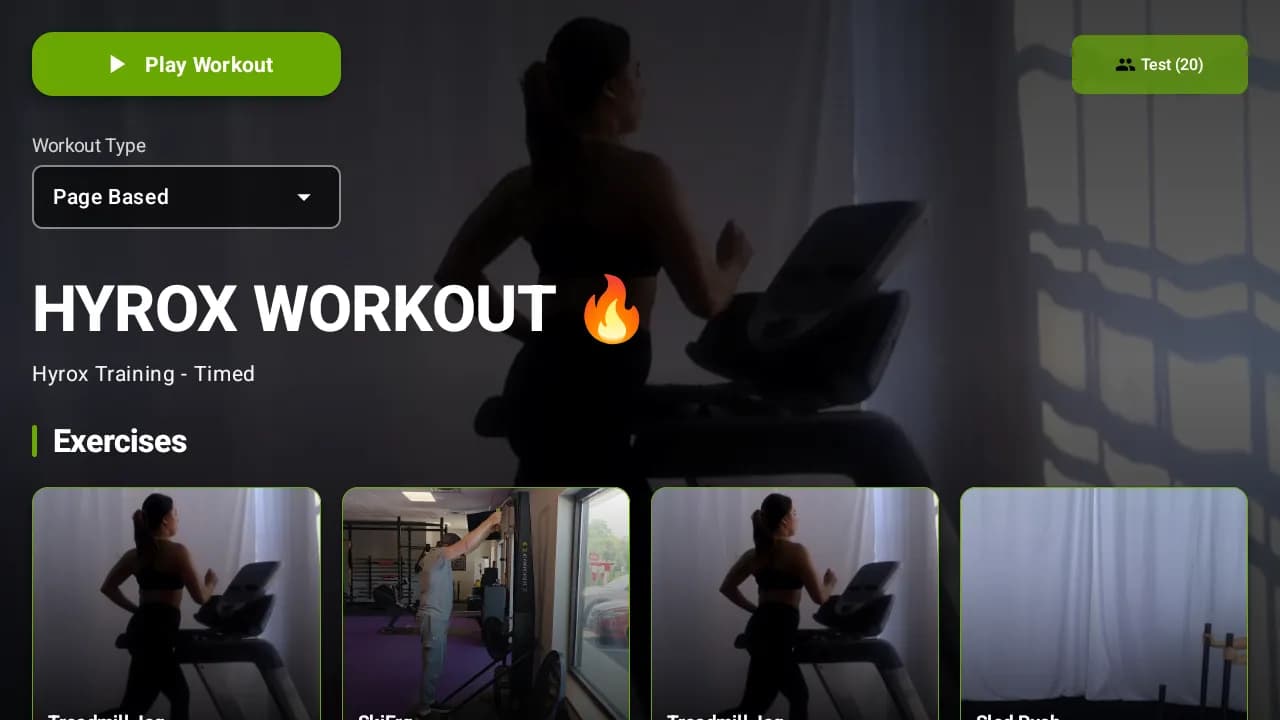
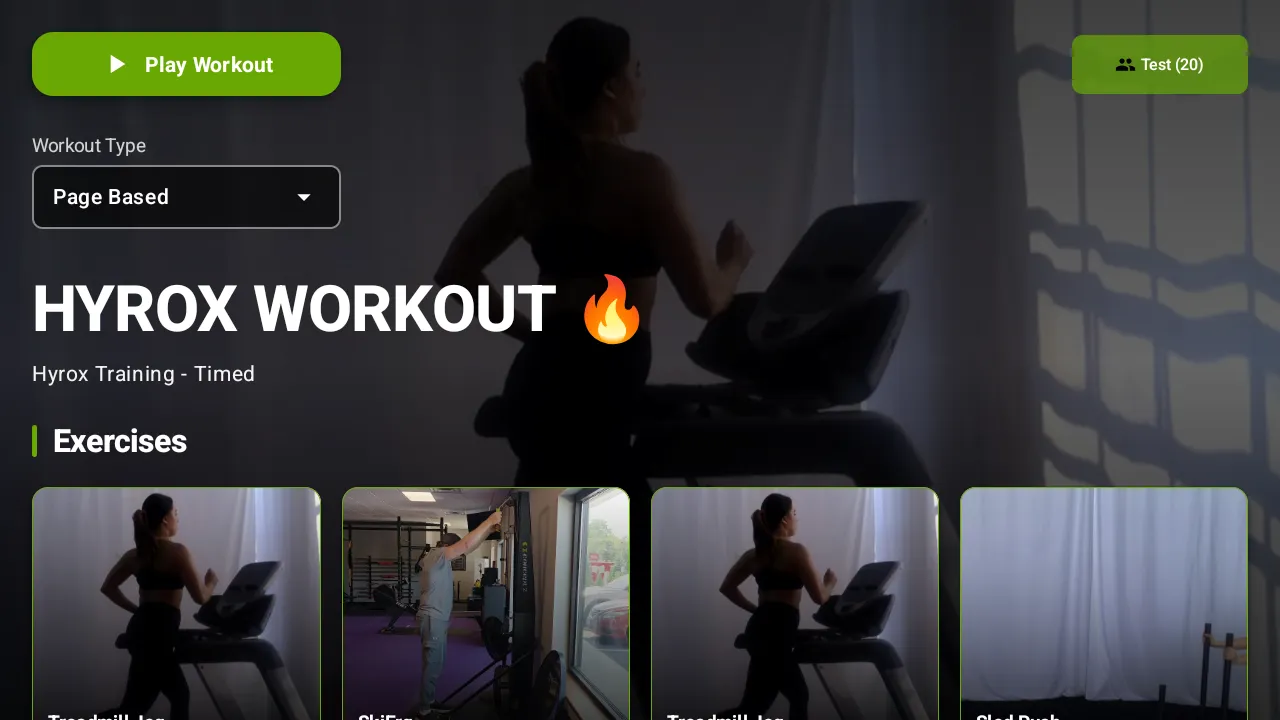
Fit Viz supports workout displays that can show:
- Station instructions clearly
- Standards and rep targets
- Video demos playing on loop for each race-specific movement
- “What’s next” prompts during transitions
This is especially valuable for Spartan Race prep movements that require technique:
- Rope climbs and grip transitions
- Carries and load positioning
- Crawl patterns and ground transitions
- Obstacle-style pull variations
And for Hyrox stations where efficiency is everything:
- Sled push and pull mechanics
- Burpee broad jump rhythm
- Wall ball standards and pacing
- Lunge form under fatigue
With Fit Viz, athletes can glance at the screen and self-correct, and coaches don’t have to repeat explanations all day.
Heart rate zones for pacing and safer race preparation
Both Hyrox and Spartan Race reward pacing. Many athletes fail because they go too hard too early, then fall apart late.
Fit Viz can display heart rate zones during training sessions so coaches can:
- Keep athletes in a target zone for run segments
- Prevent prolonged red-zone overexertion
- Coach recovery between stations
- Make intensity scalable for mixed levels
Heart rate visibility turns pacing from a guess into a coached skill especially useful when classes include beginners and competitive athletes training together.
Why Fit Viz is a competitive advantage for fitness facilities
Race athletes choose gyms that help them improve measurably. Facilities that can run professional-grade simulations gain:
- Specialty programming revenue (Hyrox prep, Spartan prep, OCR camps)
- Better retention through clear progress benchmarks
- Stronger community identity around race events
- A premium training experience that feels organized and repeatable
Fit Viz supports this by unifying:
- Workout display guidance
- Station timing and rotation
- Optional heart rate zone visualization
- Consistent execution across coaches and class times
That combination helps gyms become true training centers, not just class providers.
Conclusion
The difference between Spartan Race and Hyrox reflects the bigger split in competitive fitness: outdoor Obstacle Race unpredictability versus indoor standardized racing. Spartan tests terrain, obstacles, and grip under chaos. Hyrox tests pacing, station efficiency, and repeatable output under a fixed structure.
In the digital age, gyms that want to serve these athletes need systems that make simulations clear, timed, and repeatable. Fit Viz helps facilities run Hyrox and Spartan Race simulations using station timers, workout displays, and looping video demos so athletes train with competition-standard form and a race-day rhythm.