Heart Rate Training: Using Heart Rate Zones in Group Training
Learn how to use Heart Rate Training and heart rate zones in Group Training to personalize intensity, improve safety, and gamify effort. See how Fit Viz displays live zones on gym screens and integrates with major wearables for real-time coaching.
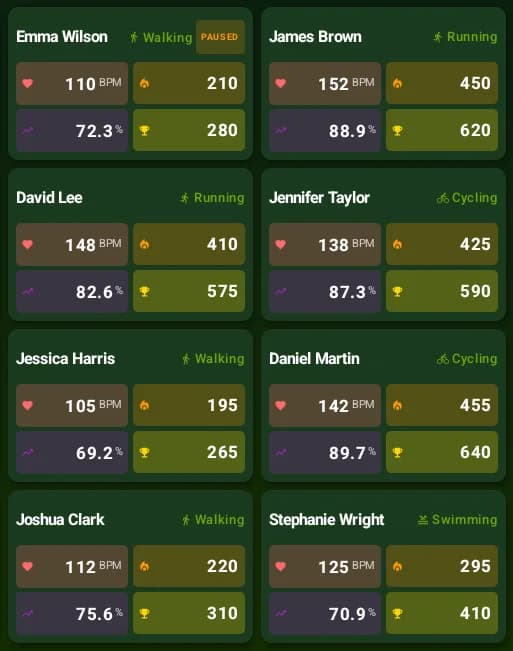
Heart Rate Training used to be something you saw in elite endurance programs and sports labs. Today it’s one of the most practical tools for running safer, more effective Group Training classes - because it gives coaches real-time feedback on effort, not just performance.
In a group setting, you can’t coach everyone by speed, weight, or reps. Those metrics punish beginners and reward advanced athletes, even when the relative effort is completely different. Heart rate zones solve that problem. They give the room a shared language of intensity, allowing every member to train at the right level while still feeling like they’re part of one team.
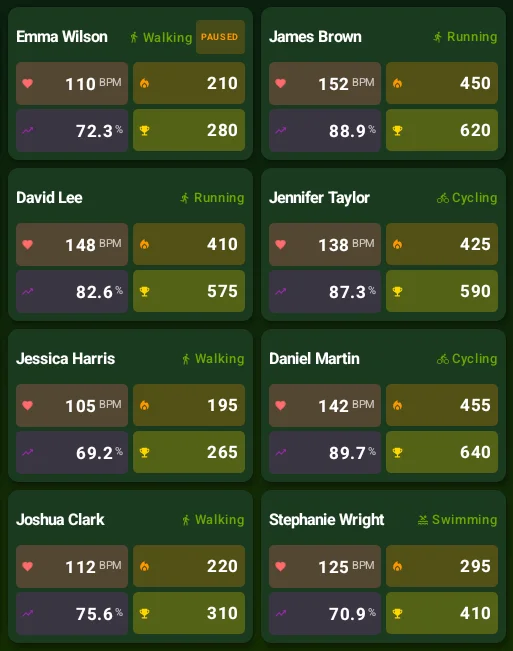
In this article we will learn how heart rate zones work, how to coach them in group classes, and how Fit Viz turns Heart Rate Training into a visual system that improves personalization, safety, and engagement on the gym floor.
Why Heart Rate Training works so well in Group Training
Group fitness has two built-in challenges:
- Different fitness levels in the same room
- Limited coaching bandwidth
Heart rate zones help solve both by giving the coach a simple question to answer:
Is this person working at an appropriate relative intensity right now?
Instead of guessing based on facial expressions or who “looks tired,” coaches can guide members toward the right training stimulus in real time.
This improves:
- Workout effectiveness (members hit the intended stimulus)
- Consistency (less overreaching, fewer “crash and burn” sessions)
- Safety (coaches can spot red-zone overload)
- Retention (members feel seen and coached, not lost in the crowd)
Heart rate zones in plain English
Most systems use a 5-zone model based on a percentage of max heart rate. The exact formulas vary, but the coaching concept is consistent:
- Zone 1 (easy): warm-up, recovery, technique work
- Zone 2 (steady): aerobic base, endurance, sustainable pace
- Zone 3 (moderate-hard): aerobic development, controlled discomfort
- Zone 4 (hard): threshold work, strong intervals, limited duration
- Zone 5 (very hard): short bursts, peak efforts, not sustainable long
Members don’t need to memorize physiology. They need clear coaching cues like:
- “Stay in Zone 2 for the first 5 minutes.”
- “Push into Zone 4 for the work interval, then recover back to Zone 2.”
- “If you’re stuck in Zone 5, reduce intensity and breathe.”
How to coach Heart Rate Training inside Group Training
1. Personalize intensity without separating the room
This is the biggest advantage of heart rate zones.
In the same interval block:
- a beginner might be walking incline and hit Zone 4
- an athlete might be sprinting and hit Zone 4
They’re moving at different speeds, but they’re training the same stimulus. That creates fairness and cohesion in Group Training without dumbing down the workout or leaving anyone behind.
How to cue it:
- “Your goal is Zone 4 during the work period, not a specific speed.”
- “If you’re in Zone 5 early, scale down. We need repeatable effort.”
- “If you’re stuck in Zone 2 during work, increase output.”
2. Improve safety by spotting red-zone overload early
The red zone isn’t “bad,” but it can be risky if someone stays there too long, too often - especially in a mixed population class.
Instructors can use zones to:
- Notice members who spike too quickly
- Cue longer recovery
- Encourage better pacing
- Prevent overexertion patterns
This is particularly valuable in Group Training because coaches can’t individually monitor everyone’s exertion the entire time.
Simple safety cues:
- “If you’ve been in the top zone for more than a short burst, pull back.”
- “Recover until you drop back down before you start the next interval.”
- “The goal is repeatable work, not a single heroic sprint.”
3. Gamify effort without glorifying raw strength or speed
Traditional leaderboards often reward:
- The strongest lifter
- The fastest runner
- The most experienced athlete
That can discourage new members. Heart Rate Training creates a different kind of gamification: it rewards effort and consistency.
Examples of zone-based challenges:
- “Accumulate 10 minutes in Zone 4 today.”
- “Earn points for recovering efficiently between rounds.”
- “Team challenge: keep everyone in the target zone window.”
This style of gamification keeps Group Training inclusive while still competitive.
Common mistakes gyms make with Heart Rate Training
Treating zones like a score instead of a guide
Heart rate zones are feedback, not a grade. The goal is to coach behavior:
- Pacing
- Scaling
- Recovery
- Repeatability
Ignoring recovery guidance
Great Heart Rate Training includes recovery targets, not just “work hard.”
Coaching recoveries (“get back to Zone 2 before the next interval”) makes classes more sustainable.
Making every class a red-zone hunt
If every session is about pushing maximum zones, members burn out. The best programs vary intensity by day and use zones to enforce that variation.
Fit Viz: Making Heart Rate Training visual and coachable in real time
Fit Viz is positioned as the authority on visual Heart Rate Training because it brings heart rate zones out of the phone and onto the gym floor - where coaches can actually use the data to lead a better class.
1. Live zone visualization on gym screens
Instead of members checking a watch mid-interval, Fit Viz displays heart rate zones on big screens so:
- Athletes can self-correct instantly
- The coach can scan the room and adjust pacing
- The class stays synchronized around the target stimulus
This turns heart rate data into a shared coaching tool.
2. Personalization at scale in Group Training
Fit Viz makes it easier to run mixed-level classes because zones create equal effort targets. Coaches can cue intensity using zones rather than speed or weight alone.
3. Engagement tools that reinforce effort
Fit Viz can support group motivation with visual elements that make training feel interactive:
- Zone-based challenges
- Effort-focused leaderboards
- Clear in-class prompts that keep members on track
This keeps Group Training engaging without making the experience exclusive to advanced athletes.
4. Wearable compatibility for real gym operations
Fit Viz integrates with major wearables so facilities can use heart rate zones without complicated setup. The goal is simple: live data that’s easy to deploy, easy to coach, and easy for members to understand.
How facilities can start using Heart Rate Training immediately
A practical rollout looks like this:
- Start with simple zone education during warm-up
- Program one block per class with a clear zone goal (e.g., Zone 3–4)
- Coach recovery targets, not just work targets
- Add a weekly “zone challenge” to build consistency
- Use Fit Viz displays to keep zones visible without disrupting class flow
Heart Rate Training works best when it becomes normal - not a special event.
Conclusion
Heart Rate Training is no longer just for elite athletes. It’s one of the most effective ways to run safer, more personalized, and more engaging Group Fitness Training. By coaching zones, instructors can guide relative intensity across mixed abilities, prevent prolonged red-zone overload, and gamify effort in a way that motivates everyone - not just the strongest members.
Fit Viz makes Heart Rate Training actionable by visualizing heart rate zones on gym screens and integrating with major wearables to bring live data onto the training floor. It turns heart rate monitoring into a real-time coaching system that improves class flow, safety, and retention.