AMRAP, EMOM, and Tabata: Which Workout Format Is Best?
Compare Tabata, AMRAP, and EMOM to choose the best workout format for your goals. Learn how Tabata workouts, AMRAP workouts, and EMOM workouts differ, and how Fit Viz combines an inbuilt workout timer with workout displays and visual exercise demonstrations to keep classes synchronized and easy to follow.
The secret weapon in modern training is not a new movement or a new piece of equipment. It’s time structure. The difference between a workout that feels sharp and a workout that feels chaotic usually comes down to one thing: how well the clock and instructions guide the room.
That’s why understanding EMOM, AMRAP and Tabata matters. Each format creates a different training stimulus, and each demands a different pacing strategy. But even more important than the definitions is execution - especially in group training, where athletes are tired, music is loud, and no one wants to stop mid-workout to ask, “What’s next?”
If you’ve ever searched for a Tabata workout, an AMRAP workout, or an EMOM workout, you’ve probably noticed two things:
- The formats are easy to describe
- The execution is where people get lost
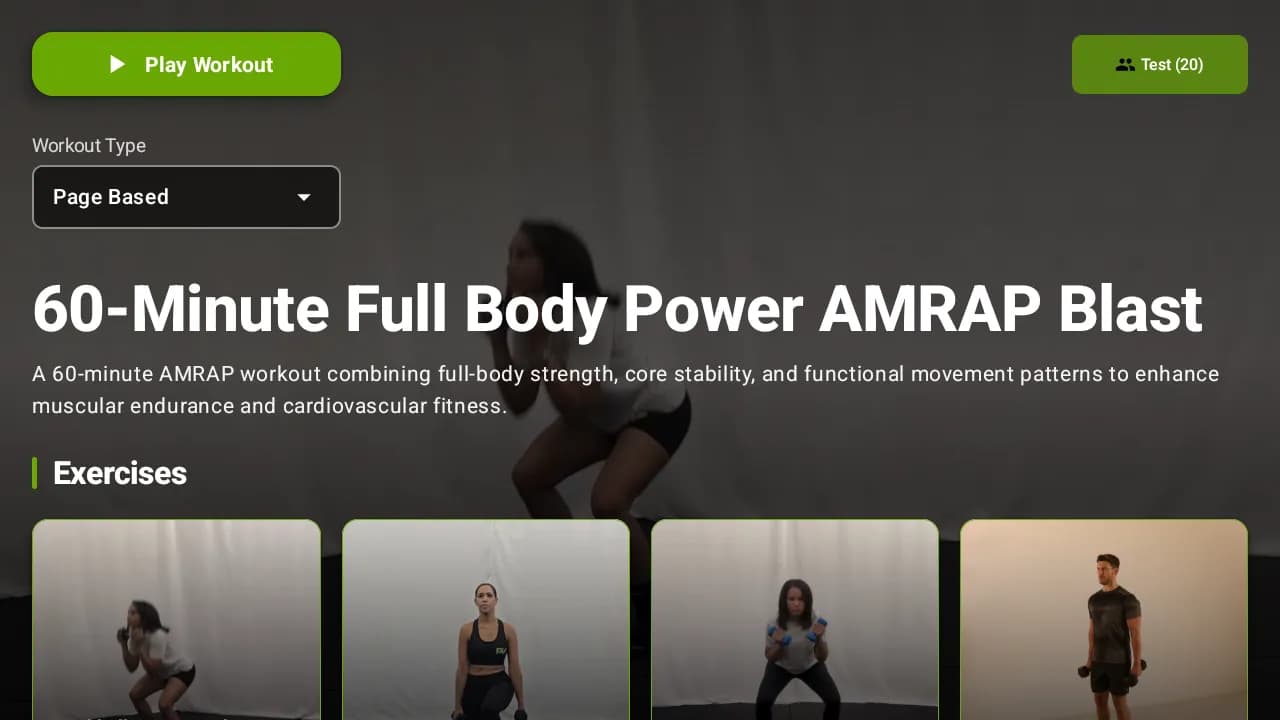
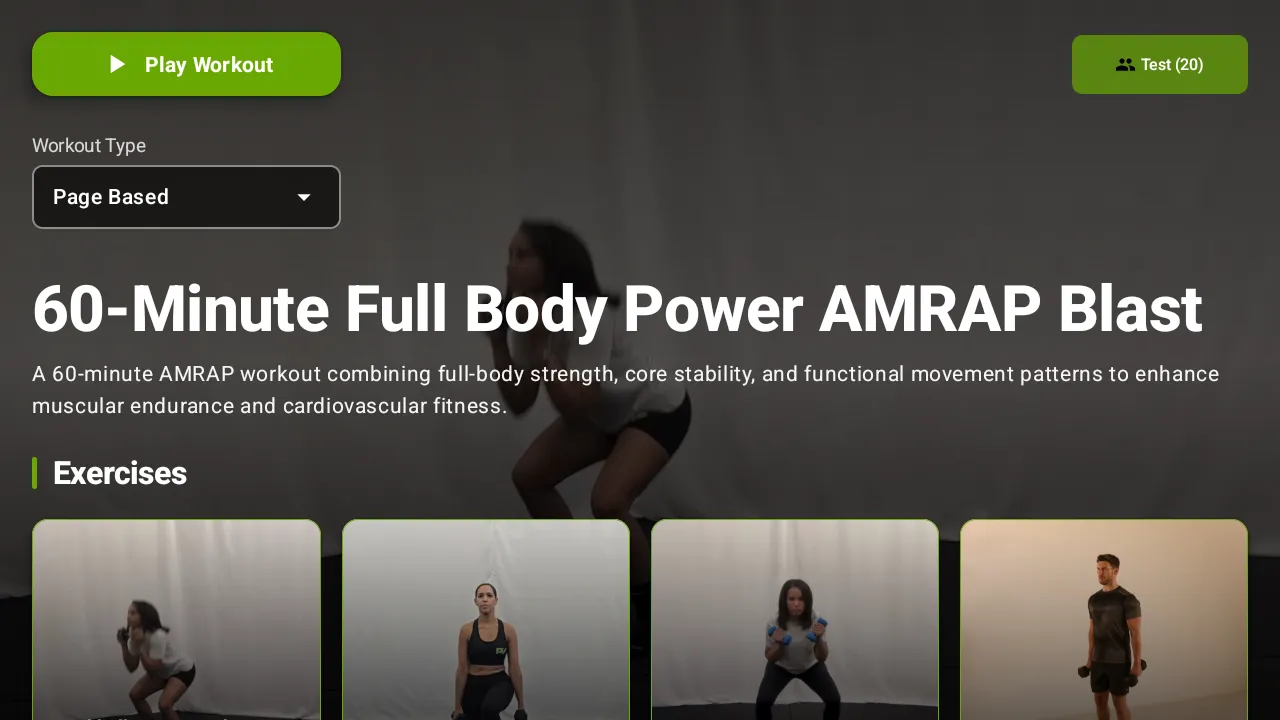
This is exactly where Fit Viz is designed to help. Fit Viz combines an inbuilt workout timer with a workout display that provides visual workout guidance and movement demonstrations, so members stay oriented even in the hardest moments.
Quick definitions (so you know what you’re choosing)
AMRAP (As Many Rounds/Reps As Possible)
An AMRAP workout is a fixed time window (e.g., 10, 15, 20 minutes) where athletes complete as many rounds or reps as possible. AMRAPs reward smart pacing and consistent effort.
EMOM (Every Minute on the Minute)
An EMOM workout starts a new mini-interval every minute. Athletes complete a task at the start of each minute and rest for the remainder. EMOMs reward efficiency and repeatable quality.
Tabata (20 seconds work, 10 seconds rest, 8 rounds)
A Tabata workout is a specific HIIT protocol: 20 seconds on, 10 seconds off, repeated 8 times (4 minutes). Tabata rewards short, explosive output and fast recovery.
The real difference: what each format trains
AMRAP trains pacing + work capacity
A strong AMRAP workout develops:
- Aerobic capacity and muscular endurance
- Sustainable power output under fatigue
- Pacing discipline (not sprinting early)
- Mental resilience and consistency
An AMRAP feels like a “pressure cooker” because the clock keeps running. You decide how hard to push and when to break - so strategy is part of the workout.
Best AMRAP uses:
- Mixed-modality conditioning tests
- Benchmark workouts and retest cycles
- Longer sessions where rhythm matters
- Classes with mixed ability levels (output scales naturally)
EMOM trains repeatable quality + controlled rest
An EMOM workout is ideal for:
- Strength endurance and technical practice
- Consistent output without chaos
- Maintaining form under time pressure
- Developing pacing through built-in recovery
EMOMs are especially effective in group classes because they structure work and rest clearly. When programmed correctly, everyone stays in sync and reps stay clean.
Best EMOM uses:
- Technique blocks (gymnastics, olympic lifting drills)
- Strength endurance (moderate load repeated)
- Conditioning intervals that need structure
- Station-based training with consistent rotation
Tabata trains HIIT density + short burst intensity
A Tabata workout is perfect for:
- Metabolic finishers
- Short high-intensity intervals
- Simple movements that don’t require setup
- Cardio pushes that benefit from crisp work/rest cycling
Tabata works because it’s simple, brutal, and time-efficient - if athletes can actually follow the work/rest cues.
Best Tabata uses:
- End-of-class finishers
- Simple movements (air bike, rower, squats, swings)
- Format-driven intensity blocks
How to choose: EMOM vs AMRAP vs Tabata (decision framework)
Use this quick filter:
Choose AMRAP when you want:
- Longer sustained effort (8–25 minutes)
- A workout where pacing and strategy matter
- A benchmark test where output is measurable
Choose EMOM when you want:
- Consistent repeatable work with built-in rest
- Quality reps under controlled fatigue
- An easy-to-run structure for large groups
Choose Tabata when you want:
- Short HIIT bursts and clear work/rest cycling
- A high-density finisher
- A simple format that drives intensity fast
Why these formats often fail in real gyms
Most “bad” AMRAP, EMOM, and Tabata experiences aren’t programming problems. They’re execution problems caused by poor visibility and unclear timing.
AMRAP failures usually come from:
- Athletes not seeing time remaining (pacing collapses)
- Confusion about movement order or rep scheme
- Unclear standards (reps become inconsistent)
EMOM failures usually come from:
- Athletes forgetting what minute they’re on
- Unclear odd/even minute instructions
- Work prescribed too high, eliminating rest
Tabata failures usually come from:
- People missing work/rest transitions
- Athletes losing track of rounds
- Setup-heavy movements wasting the 20-second work window
- The room desynchronizing because timing cues aren’t visible
All of these failures have one root cause: the workout and the clock are not guiding the room clearly.
Fit Viz: inbuilt workout timer + workout display for visual workout guidance
Fit Viz solves the execution problem by making the timer and the workout one unified system, displayed clearly on large screens in the training space.
Instead of:
- A separate wall clock timer
- A coach running a phone timer
- A whiteboard for instructions
- Verbal reminders for transitions
Fit Viz provides a combined experience:
- The workout is displayed in structured blocks
- The timer runs automatically for that block
- Movement demonstrations are visible on screen
- Transitions and “what’s next” are shown clearly
This is what makes AMRAP, EMOM, and Tabata feel professional in a group setting.
How the Fit Viz inbuilt workout timer works (practically)
Fit Viz’s inbuilt workout timer is designed to run the room with minimal coach effort.
1. Timers built into the workout flow
Instead of programming a timer separately, coaches start the class flow and the timer follows the workout structure:
- Warm-up block timing
- Strength block timing
- Conditioning intervals
- Rest periods and transitions
- Finishers and cooldowns
This reduces setup time and eliminates “wrong timer mode” errors.
2. Clear work/rest cues (color and prompts)
During interval formats like EMOM and Tabata, the timer provides obvious cues:
- Work vs rest changes are visually distinct
- Athletes don’t need to squint at a small clock
- Transitions are clear even with loud music
This keeps the whole room synchronized without constant shouting.
3. Round and interval tracking
One of the biggest problems in EMOM and Tabata is losing count. Fit Viz keeps the class oriented by displaying:
- What round/minute you’re on
- How many rounds remain
- What movement is assigned (especially for alternating EMOMs)
This reduces confusion and improves compliance.
Visual workout guidance and demonstrations: why it matters
Timing is only half of execution. The other half is understanding what to do during that time.
Fit Viz supports visual workout guidance through the workout display:
- The current movement and rep scheme is visible
- The next movement/station can be previewed
- Short movement demonstrations reduce confusion
- Coaches spend less time repeating instructions
- New members feel more confident (and stay longer)
This is especially valuable in:
- Multi-station EMOM workouts
- AMRAPs with multiple movements
- Tabata circuits that alternate exercises each round
When fatigue hits, members stop thinking. Visual guidance keeps them moving correctly.
Real examples: what these formats look like with Fit Viz
Example AMRAP workout (15 minutes)
Fit Viz displays:
- The movement list and reps
- A large countdown timer
- Clear standards and scaling tiers (if used)
- A prompt for time remaining (so athletes pace better)
Example EMOM workout (12 minutes)
Odd minutes: 10 kettlebell swings
Even minutes: 8 burpees
Fit Viz displays:
- “Minute 1: swings” / “Minute 2: burpees” cues
- Minute counter and total minutes
- Work/rest timing automatically
- The movement demo if needed
Example Tabata workout (4 minutes)
Tabata air bike (calories)
Fit Viz displays:
- 20s work / 10s rest switching clearly
- Round count 1–8
- Work/rest prompts that keep athletes synchronized
- The timer and the movement shown together
The result is a class that feels guided instead of chaotic.
Conclusion
Choosing between AMRAP, EMOM, and Tabata isn’t about which is “best.” It’s about matching the format to the goal: pacing and work capacity (AMRAP), repeatable quality with structured rest (EMOM), or HIIT intensity in short bursts (Tabata).
But execution is what separates a great workout from a messy one. Fit Viz makes these formats easier to run and easier to follow by combining an inbuilt workout timer with a workout display that provides visual workout guidance and movement demonstrations. Members stay oriented, transitions stay clean, and coaches spend less time managing logistics and more time coaching.