Workout Stations: How to Run Station-Based Training Without Confusion
Learn how to run [Workout Stations and Workout Circuits](/blog/gym-buddy-apps) without confusion. Get best practices for station maps, rotation rules, and visible timers. See how Fit Viz uses color-coded layouts and Rest & Rotate screens to keep large classes synchronized and efficient.
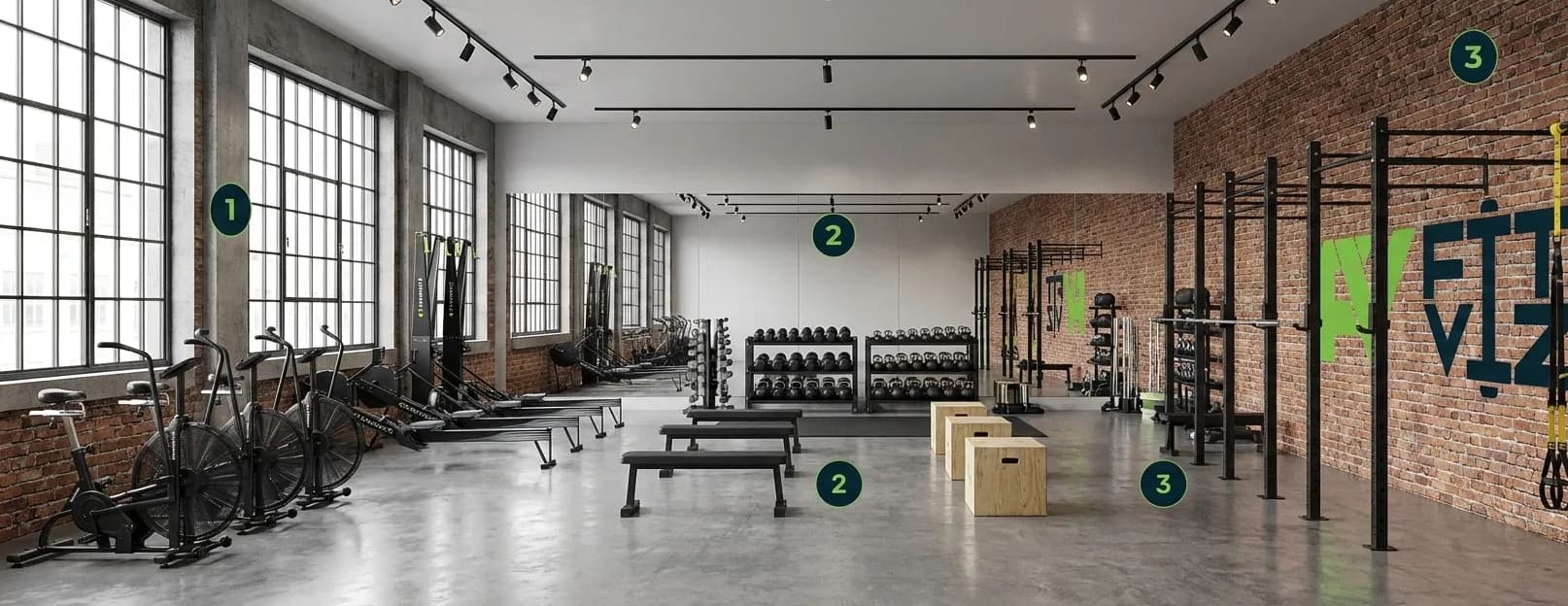
Running Workout Stations with 20–30 people can feel like controlled chaos. Station-based training is one of the most effective ways to coach large groups, keep intensity high, and use limited equipment efficiently - but it only works when the room stays synchronized. The moment athletes forget where to go, rotate early, rotate late, or miss a station, your Workout Circuits turn into confusion instead of coaching.
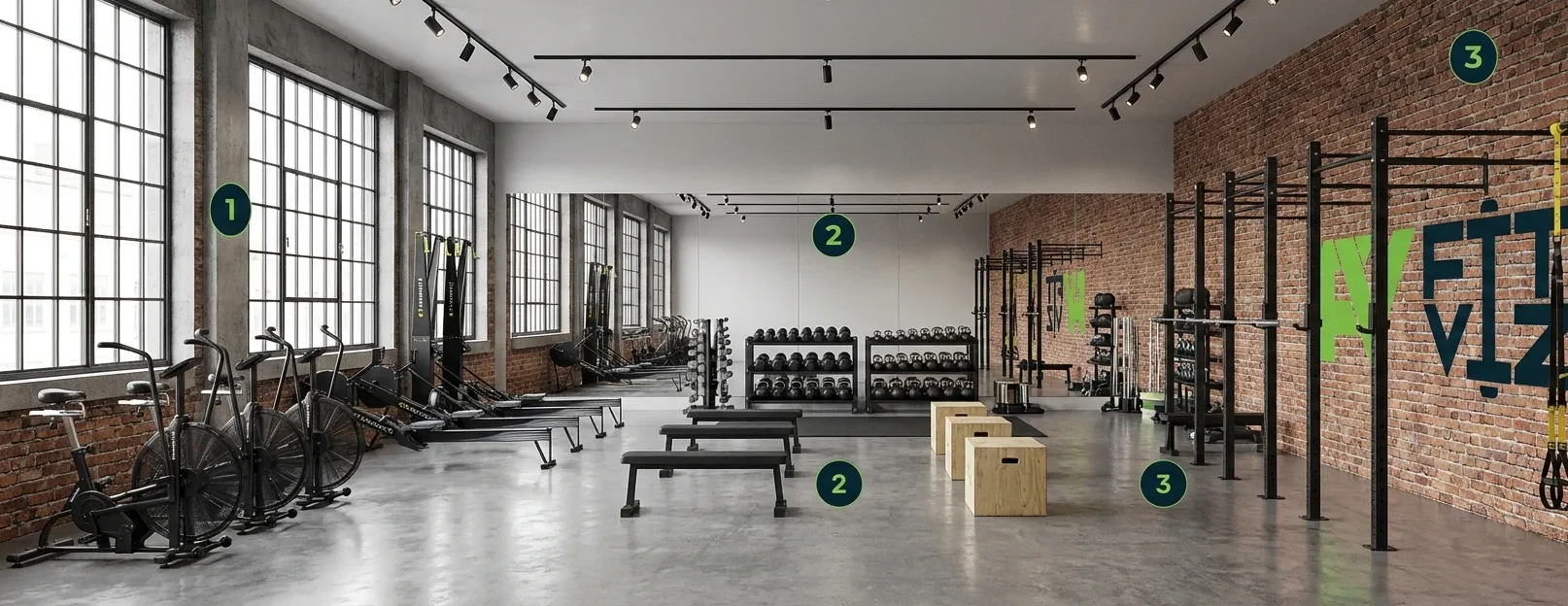
The best facilities don’t solve this by shouting louder. They solve it with systems: clear station maps, visible timing, and consistent rotation cues. This guide explains how to run workout stations smoothly, the common mistakes that create circuit confusion, and how Fit Viz uses color-coded displays and “Rest & Rotate” timing screens to keep every athlete on track.
Why workout stations work (when they’re run correctly)
Workout Stations and Workout Circuits are popular because they solve multiple facility challenges at once:
- Higher coaching leverage: one coach can manage a larger class
- Equipment efficiency: limited rowers, bikes, or weights can still support big groups
- Built-in pacing: stations naturally create variety and distributed fatigue
- Better engagement: athletes stay busy and avoid long idle time
- Scalability: the same circuit can work for mixed levels by adjusting loads or reps
But all of these benefits disappear when station flow breaks down.
The real problem: station-based training fails because of timing and clarity
Most station confusion comes from two issues:
1. People don’t know where to go
This happens when:
- Stations aren’t labeled clearly
- The station order changes without visibility
- The plan is only explained verbally once
- The “map” is on a whiteboard that half the room can’t see
2. People don’t know when to move
This happens when:
- Rotations are called verbally over music
- Timers are not visible from every station
- Some stations are far from the clock
- Transitions aren’t standardized (people guess)
Workout Circuits succeed when the entire room shares the same timing reference and the same station map.
The essentials of running Workout Stations without confusion
1. Use a station map that matches your equipment layout
Your circuit design should reflect how the room is actually arranged. Avoid forcing athletes to zig-zag across the space.
Best practices:
- Group similar equipment together (rowers together, dumbbells together)
- Build a loop that flows naturally around the room
- Avoid station paths that cross in the center (traffic jams)
- Ensure each station has enough space for movement and safety
A station map that matches the room reduces collisions and hesitation.
2. Label stations clearly and consistently
Your station system should be unambiguous. Options include:
- Numbers (Station 1–12)
- Letters (A–L)
- Colors (Red, Blue, Green)
- Zones (Rower Zone, DB Zone, Rig Zone)
The key is consistency. Members should learn your system once and recognize it every time.
3. Standardize the rotation rule: always “rest and rotate”
Confusion increases when rotation rules change class to class. A reliable structure looks like:
- Work interval
- Rest interval
- Rotate during rest
- Start work at the next station together
This eliminates the two most common problems:
- Athletes rotating early to “get ahead”
- Athletes staying late because they didn’t hear the cue
A “Rest & Rotate” structure makes movement predictable.
4. Make timing visible from every station
If athletes can’t see the timer, they can’t stay synced. A station circuit requires:
- Large, readable timers
- Placement that covers all sightlines
- Cues that clearly indicate work vs rest vs rotate
If your class relies on a coach calling out time, it will break under noise and fatigue.
5. Reduce verbal instruction during the circuit
The more a coach has to shout, the more the class depends on hearing perfectly. In real gyms:
- Music is loud
- Athletes are breathing hard
- Equipment noise is constant
- People miss instructions
The best system is visual: members glance up and know exactly what’s happening.
Common mistakes that create station chaos
- Too many stations for the room size
- Unclear station numbering or inconsistent labeling
- Varying work/rest lengths without visible cues
- No transition window (people rotate during work)
- Stations placed too far apart
- Workouts that require long setup times (wasting the interval)
- The timer is only visible from one corner
These mistakes don’t just reduce quality - they increase member frustration, especially for new people.
How Fit Viz simplifies Workout Stations and Workout Circuits
Fit Viz is built to solve the exact problems that make station training chaotic: visibility, timing, and clarity.
1. Color-coded screen layouts that match physical equipment
Fit Viz can display Workout Stations using color-coded layouts that align with what members see on the floor. Instead of trying to memorize instructions, athletes can match:
- Station colors on the screen
- To the equipment or markers in the room
This reduces errors immediately - especially in large classes or for new members.
2. “Rest & Rotate” screens that keep the whole room synchronized
Fit Viz supports Rest & Rotate visual timing, making rotation rules obvious:
- Countdown timer for work
- Clear transition to rest
- Rotation cue visible to everyone
- A synchronized restart for the next interval
This eliminates the need for constant shouting and removes ambiguity about when to move.
3. Clear “what’s next” prompts reduce hesitation
In station training, hesitation costs time and momentum. Fit Viz helps keep flow tight by showing:
- Current station work
- Next station assignment
- Time remaining
- Rotation direction and timing
When athletes always know what’s next, the circuit stays smooth.
4. Less coach admin, more coaching
When Fit Viz runs the timing and display clarity, coaches spend less effort managing logistics and more effort on:
- Correcting form
- Coaching intensity
- Helping with scaling
- Motivating athletes during the hard moments
That improves both performance and member experience.
Why better station flow improves retention
Workout Circuits should feel energizing, not stressful. When station training is clear and efficient:
- Members feel competent
- New members aren’t embarrassed
- Classes feel professional and well-run
- Coaches have more bandwidth to connect
- Athletes leave feeling successful
Clarity drives confidence. Confidence drives consistency. Consistency drives retention.
Fit Viz supports that outcome by making station training easier to follow and harder to mess up.
Conclusion
Workout Stations and Workout Circuits can transform your facility’s training model, but they only work when everyone knows where to go and when to move. The best station-based classes are built on visible timing, clear station maps, and standardized rotation rules.
Fit Viz simplifies Workout Stations with color-coded screen layouts that match your equipment and “Rest & Rotate” countdown screens that keep the whole room synchronized. No more shouting over music. Just efficient, professional class flow that members can follow instantly.