Workout Timers: EMOM, AMRAP, and Tabata for Effective Programming
Learn how Workout Timers work and when to use EMOM, AMRAP, and Tabata for effective programming. Discover how Fit Viz delivers customizable timers on big screens to keep classes synchronized, clear, and easy to follow for every athlete.
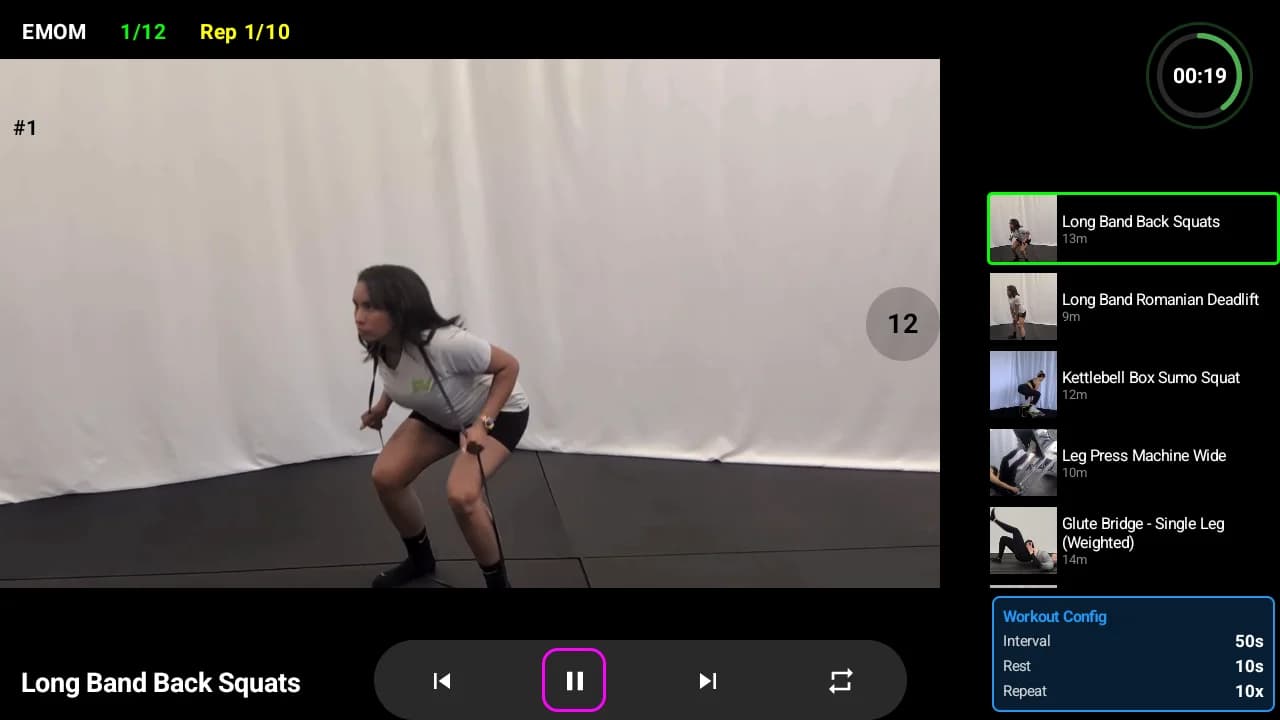
In group training, the clock is the boss. A great coach can bring energy and expertise, but Workout Timers determine the rhythm of the room: when athletes work, when they rest, when they transition, and how clearly they understand what’s next. If the timer experience is confusing, you lose intensity, accuracy, and flow.
That’s why understanding the major formats - EMOM, AMRAP, and Tabata - is essential for effective programming and for running classes that feel professional. This guide explains what each format is best for, common mistakes gyms make when using them, and why Fit Viz is built to deliver timers as a visual system (not just numbers on a wall).
Why Workout Timers matter more than the workout itself
The best workouts still fail if timing is unclear. In a busy room, athletes are not listening to instructions every second. They need a shared reference point that keeps everyone synchronized.
The right Workout Timers help you:
- Maintain intensity and pacing
- Reduce confusion during transitions
- Keep stations aligned in large classes
- Protect safety (rest is part of training)
- Improve consistency across coaches and class times
A timer isn’t just timekeeping. It’s class control.
EMOM: Every Minute on the Minute (precision and repeatability)
What EMOM means
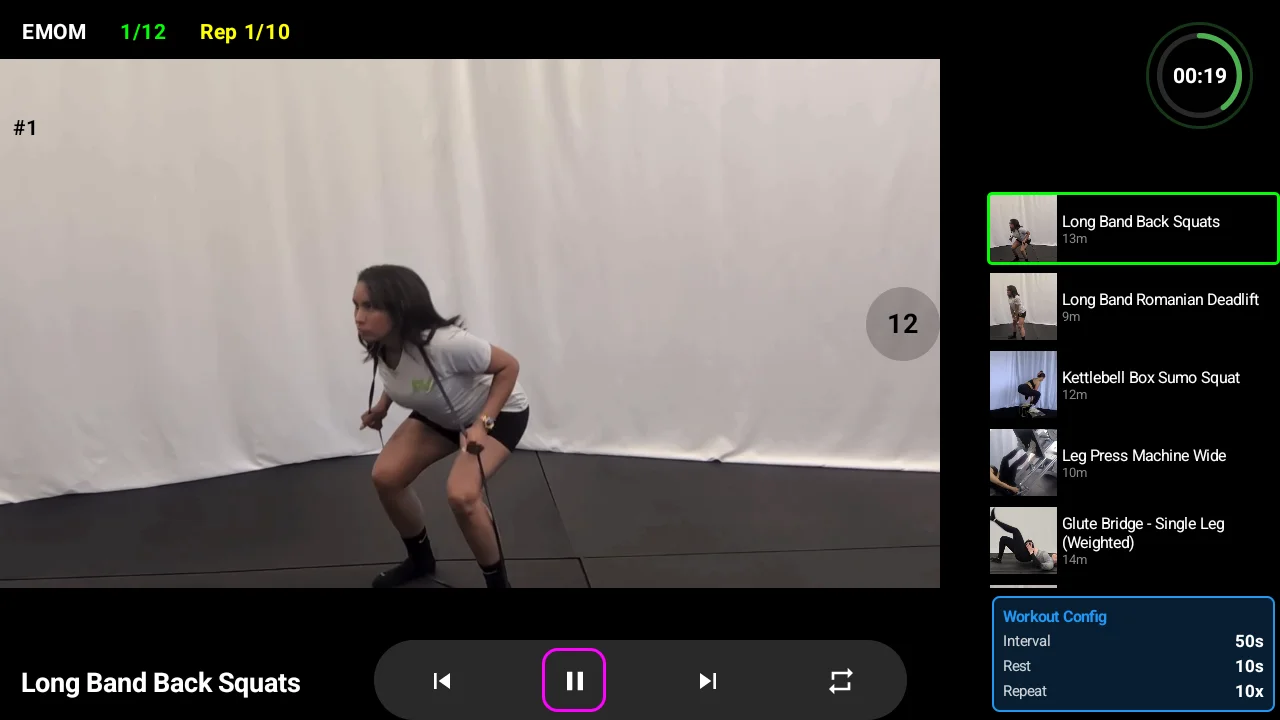
EMOM stands for “Every Minute on the Minute.” Athletes complete a prescribed task at the start of each minute, then rest for the remainder of that minute. The work-to-rest ratio is built in: faster completion equals more rest.
Why EMOM works so well
EMOMs are ideal for:
- Skill practice under mild fatigue
- Strength endurance and repeatable quality reps
- Structured conditioning without chaos
- Pacing discipline (not sprinting too early)
Because EMOMs repeat, they’re one of the easiest formats for athletes to learn and one of the best for coaches to run at scale.
Common EMOM mistakes
- Setting reps too high so athletes have no rest (form breaks down)
- Unclear station instructions (people forget what minute they’re on)
- Not signaling transitions clearly (the room desynchronizes)
A great timer system solves the “what minute are we on?” problem.
AMRAP: As Many Rounds or Reps as Possible (capacity and grit)
What AMRAP means
AMRAP workouts challenge athletes to complete as many rounds or reps as possible within a fixed time window (e.g., 10 minutes, 15 minutes, 20 minutes).
Why AMRAP is a staple
AMRAP is used because it tests:
- Mental toughness and pacing
- Aerobic capacity and muscular endurance
- Work capacity under time pressure
- Strategy (when to break, when to push)
AMRAPs are also great for mixed-ability classes because everyone is “doing the same workout,” but output scales naturally.
Common AMRAP mistakes
- Unclear movement standards (reps become inconsistent)
- Too many movements for the time window (no rhythm develops)
- Timer visibility issues (athletes can’t manage pace if they can’t see time remaining)
AMRAP only works when athletes can see the clock easily from anywhere.
Tabata: 20 seconds on, 10 seconds off (density and intensity)
What Tabata means
Tabata is a specific interval format: 20 seconds of work followed by 10 seconds of rest, repeated for 8 rounds (4 minutes total). It’s one of the most recognized HIIT timer structures.
Why Tabata is effective
Tabata is ideal for:
- High-intensity conditioning blocks
- Metabolic finisher segments
- Classes that need short, punchy intervals
- Simple movement patterns with clear effort targets
Because it’s fast and repetitive, Tabata can produce high training density in minimal time.
Common Tabata mistakes
- Choosing movements that require setup time (the interval is too short to transition)
- Not giving athletes visual cues for work vs rest (people lose count)
- Running Tabata without clear round tracking (the room drifts)
Tabata is where a strong visual timer makes the biggest difference, because athletes can’t think mid-sprint.
EMOM vs AMRAP vs Tabata: how to choose the right Workout Timer format
Use this simple decision framework:
Choose EMOM when you want:
- Quality reps repeated over time
- Pacing with built-in rest
- Skill work that stays clean
- Structure for larger groups
Choose AMRAP when you want:
- Sustained effort and strategy
- A longer conditioning challenge
- A benchmarkable test of capacity
- Scalable intensity across mixed abilities
Choose Tabata when you want:
- Short, explosive intensity
- A finisher or metabolic hit
- Clear work/rest alternation
- High energy in limited time
A great facility uses all three formats depending on the training goal.
Why timer quality matters in fitness facilities
Most gyms still rely on one of these approaches:
- A basic LED wall clock with a remote
- A coach running a timer app on their phone
- A whiteboard plus verbal countdowns
These methods work, but they create problems:
- Athletes can’t see the timer from every angle
- Transitions aren’t clear
- Coaches lose focus fiddling with remotes
- Classes feel less polished
When timers are integrated into a visual workout system, the entire class runs cleaner.
Fit Viz: Workout Timers built for real class execution
Fit Viz is positioned as a leader in Workout Timers because it treats timing as part of the workout experience, not a separate gadget on the wall.
What makes Fit Viz Workout Timers different
Visually guided timers on big screens
Fit Viz puts EMOM, AMRAP, and Tabata timers on high-definition displays so athletes can see the clock from anywhere. This reduces confusion and keeps the room synchronized.
Highly customizable formats
Fit Viz timers can be configured to match how coaches actually program:
- Work/rest intervals
- Round counts and block structure
- Station-based transitions for large classes
- Clear “what’s next” prompts
Integrated class flow
Fit Viz supports timer formats alongside the workout content so members don’t lose their place. Instead of staring at a timer and guessing what’s next, athletes see:
- The timer
- The current block
- The movement or station guidance
That’s what makes timers feel “premium” and keeps athletes locked into the workout.
The “pain cave” problem (and how great timers solve it)
When fatigue hits, athletes lose track:
- What round they’re on
- How much time is left
- Whether it’s work or rest
- What station comes next
The more intense the class, the more important the timer becomes. Fit Viz solves this by making the class easy to follow visually - so athletes stay focused on output, not logistics.
Conclusion
Workout Timers shape the entire class experience. EMOM builds repeatable quality and pacing, AMRAP tests work capacity and strategy, and Tabata delivers high-intensity intervals in a short window. Choosing the right timer format improves results - but only if the timer experience is clear, visible, and synchronized for the whole room.
Fit Viz offers versatile, highly customizable EMOM, AMRAP, and Tabata Timer formats displayed on high-definition screens, turning timers into a visual system that keeps athletes aligned and coaches focused on coaching.