Metcon Compound Lifts: Build Strength, Boost Aerobic Threshold, Dominate Metcons
Run a 4-week hybrid training block that builds 1RM strength in compound lifts while improving aerobic threshold, muscular endurance, and Metcon performance under fatigue. Learn how Fit Viz powers execution with workout displays, built-in timers, heart rate zones, and digital leaderboards for benchmark tracking.
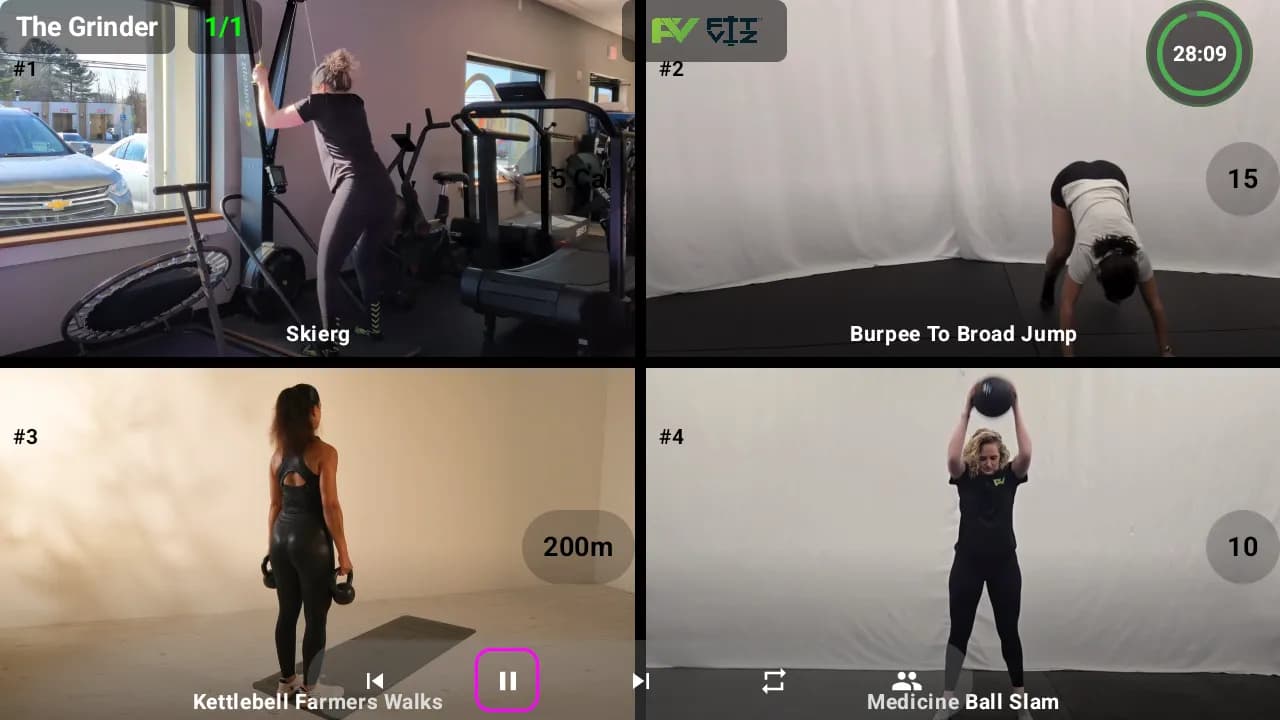
The “Hybrid Workout” approach is simple to say and hard to build: increase 1RM strength in compound lifts while also improving run performance under fatigue. Most gyms train these goals separately - strength days feel strong but slow, conditioning days feel fast but weak. A true hybrid block merges them intentionally by combining heavy lifting, structured Metcon work, and controlled conditioning focused on aerobic threshold.
This 4-week plan is designed for facilities that want repeatable programming with measurable outcomes. It blends:
- Compound lifts for strength and force production
- Muscular endurance to tolerate volume and “heavy legs”
- Aerobic threshold development so intensity is sustainable
- Event-style conditioning and compromised running so race pace holds under fatigue
What this program is designed to improve
1. Compound lifts: stronger legs and trunk under load
The strength portion (back squat, strict press, clean & jerk, front squat deload) builds:
- Higher force output per rep
- Better bracing under fatigue
- Stronger positions for functional movements (thrusters, wall balls, carries)
In hybrid training, your compound lifts are not just “strength.” They are the foundation that makes Metcons and running more efficient.
2. Aerobic threshold: sustainable pace under fatigue
Your aerobic threshold is the intensity you can hold without spiraling into constant redline. Hybrid athletes live here because Hyrox-style training and compromised running punish poor aerobic control.
The program uses Zone 2 and Zone 3 work to build:
- Faster recovery between bouts
- Better pacing in longer Metcons
- Less drop-off in later rounds
- improved consistency across weeks
3. Muscular endurance: the ability to keep moving when legs are cooked
Hybrid performance often fails not because of peak strength, but because the legs and trunk can’t sustain volume. This block builds muscular endurance through:
- High-rep bodyweight patterns
- Long interval grinders (EMOMs)
- Mixed-modal sequences that simulate real fatigue
Week 1: Foundation and Baseline
Focus: movement quality and aerobic threshold
Week 1 is about setting clean positions and learning pacing. Athletes often rush into intensity and miss the point: if form breaks down early, the block becomes a survival plan instead of a performance plan.
Monday (Strength + Metcon)
- Compound lifts: Back Squat 5×5 @ 75%
- Metcon: 15-minute AMRAP
- 10 thrusters
- 10 pull-ups
- 200m sprint
Why it works:
This Metcon exposes pacing. Thrusters spike heart rate. Sprinting punishes anyone who overreaches early. Your goal is consistent rounds, not a heroic first 5 minutes.
Wednesday (Hyrox Workout)
- 3 rounds
- 1000m row
- 50 wall balls
- 1000m run (easy pace)
Aerobic threshold emphasis:
This is where you build the Workout. Your output should be repeatable, not maximal.
Fit Viz execution advantage:
Display live heart rate zones on screens so athletes stay honest in Zone 3 (controlled effort) rather than drifting into redline too early.
Friday (Compromised Running)
- 6 rounds
- 400m run (fast)
- 20m sled push (heavy)
- no rest
Why it works:
This is a hybrid reality: run hard with heavy legs, then repeat. The goal is minimal pace drop-off.
Week 2: Volume and Structural Fatigue
Focus: muscular endurance and “heavy legs” tolerance
Week 2 increases the ability to sustain work without form collapse. This is where athletes learn to stay efficient while uncomfortable.
Monday (Strength + Metcon)
- Compound lifts: Strict Press 4×8
- Metcon: “Cindy” (20-minute AMRAP)
- 5 pull-ups
- 10 push-ups
- 15 squats
Why it works:
Cindy is pure muscular endurance. It teaches rhythm, breathing, and movement efficiency.
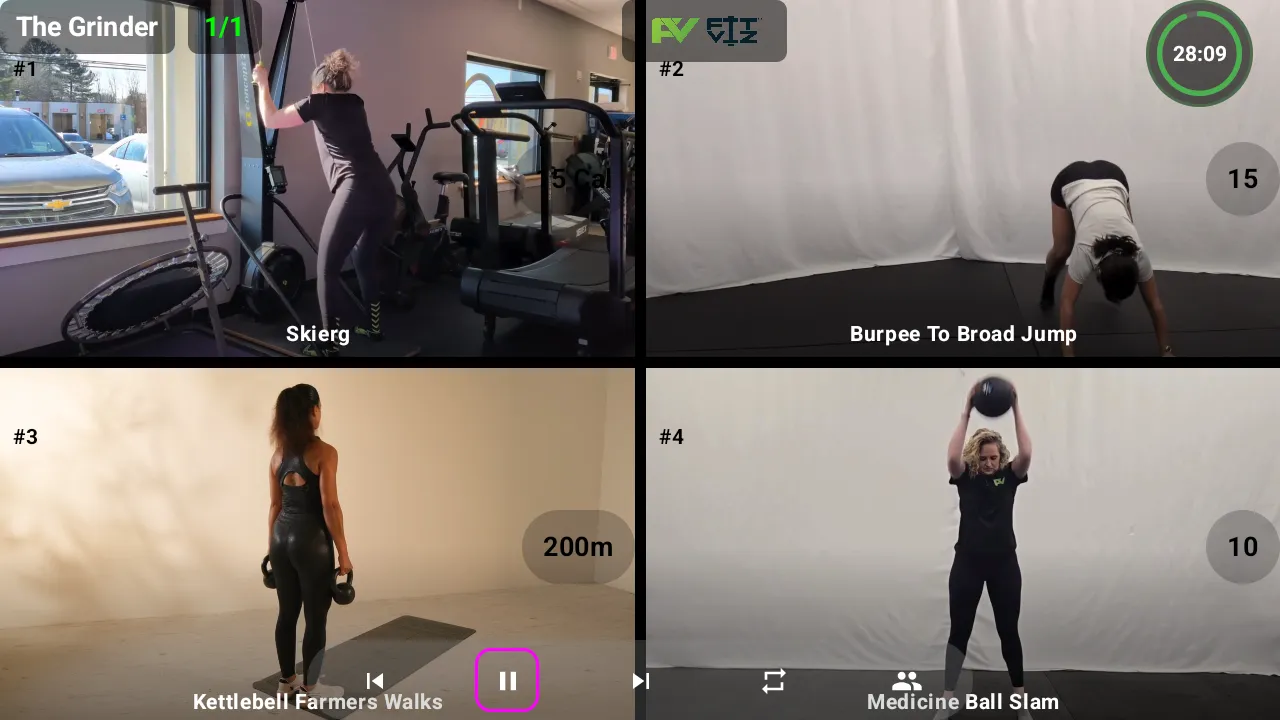
Wednesday (The Grinder)
- 30-minute EMOM
- Minute 1: 15 calorie ski
- Minute 2: 15 burpee broad jumps
- Minute 3: 200m farmers carry
- Minute 4: 10 Slam ball slams
Why it works:
This is a grinder because it forces repeatable output under accumulating fatigue. It also builds grip and trunk endurance that carries over to race-style work.
Friday (Hybrid Simulation)
- For time
- 1-mile run
- 50 dual DB snatches
- 800m run
- 50 box jumps
- 400m run
- 50 wall balls
Why it works:
It blends running with functional stations - exactly the hybrid pattern that exposes weaknesses.
Week 3: Peak Intensity and Threshold Testing
Focus: pushing the redline strategically and testing race-pace splits
Week 3 is where athletes tend to blow up if they can’t manage aerobic threshold. The goal isn’t to avoid intensity - it’s to use it with discipline.
Monday (Explosive Strength + Metcon)
- Compound lifts: Power Clean + Jerk (build to heavy double)
- Metcon: 3 rounds for time
- 500m row
- 15 power cleans (135/95)
Why it works:
You train power, then apply it under fatigue. This is where technique tends to degrade - so you need visual and coaching support.
Wednesday (Hyrox Intervals)
- 4 rounds
- 1km run (race pace)
- 100m sandbag lunges
- rest 2 minutes between rounds
Aerobic threshold emphasis:
Race pace only matters if it holds. Watch split consistency.
Fit Viz execution advantage:
Use the interval timer to track round-to-round drop-off and keep everyone synchronized. Display pacing targets and countdowns so athletes don’t guess.
Friday (The Full Send Partner WOD)
- Partner WOD
- 2000m row
- 100 devil’s press
- 2000m run
- split reps, both run
Why it works:
Partner formats increase output and accountability while still demanding intelligent pacing.
Week 4: Active Recovery and Benchmark
Focus: dissipate fatigue, sharpen, then test
Week 4 keeps athletes moving without adding stress, then uses a clear benchmark to validate progress.
Monday (Deload Strength)
- Front squat 3×5 @ 50%
- focus on speed and depth
Wednesday (Zone 2 Flow)
- 45-minute steady state mix (bike, row, jog)
- keep HR below 140 bpm
Aerobic threshold emphasis:
This builds capacity while flushing fatigue.
Friday (Benchmark)
The Fit Viz Hybrid Test:
- 1000m run
- 50 wall balls
- 1000m row
- 50 burpees
- 1000m run
Why this benchmark works:
It tests compromised running, muscular endurance, and aerobic threshold control in one clear score.
Why Fit Viz is built for this type of program
This hybrid block will succeed or fail based on execution. The programming is solid, but athletes need structure to perform it consistently across coaches, time slots, and class sizes.
1. Workout display + visual demos improve movement quality
High-skill movements inside compound lift sections (like cleans and jerks) break down under fatigue. Fit Viz can show 4K loop demos and technique reminders on screen so athletes self-correct quickly and coaches spend less time repeating basics.
2. Built-in workout timers run Metcons and intervals cleanly
Every major session here depends on timing (AMRAP, EMOM, intervals, rests). Fit Viz timers keep the room synchronized and reduce coaching admin so the coach can focus on form and pacing.
3. Heart rate zones make aerobic threshold coaching real
Aerobic threshold is hard to coach with “try to go easy.” Fit Viz displays heart rate zones so athletes stay where they should - especially in Week 1 and Week 4 - while still pushing correctly in Week 3.
4. Digital leaderboards make benchmarks stick
The benchmark matters because it creates a repeatable score and a reason to return. Fit Viz can automatically capture and display results, driving motivation through measurable improvement and healthy competition.