How to Wear a Heart Rate Monitor: Complete Guide for Accurate Tracking
Learn how to wear HRM devices correctly with this complete guide. Discover proper heart rate monitor placement for chest straps and armbands to ensure accurate tracking every workout.

Even the most advanced heart rate tracking software cannot compensate for poor sensor placement. If your heart rate monitor is worn incorrectly, the data you receive may lag, spike unexpectedly, or drop out entirely. Understanding how to wear hrm devices properly is essential for accurate tracking, meaningful insights, and safe training with proper heart rate zones.
This guide explains exactly how to wear hrm devices for both men and women, covering chest straps and optical armbands so you can get reliable heart rate data every workout.
Why Proper HRM Placement Matters
Heart rate monitors measure electrical or optical signals produced by your heartbeat. When sensors are positioned incorrectly or worn too loosely, the signal becomes unstable.
Incorrect placement can result in:
- Delayed heart rate readings
- Sudden spikes or drops
- Inaccurate training zones
- Poor performance tracking
Learning how to wear hrm devices correctly ensures that your heart rate data reflects your actual effort in real time.
Chest Strap Heart Rate Monitors: The Gold Standard
Chest straps remain the most accurate option for heart rate tracking because they measure the electrical activity of the heart directly.
Correct Chest Strap Placement
The sensor pad must sit directly against the skin, positioned just below the sternum (breastbone). The strap should wrap evenly around the torso without twisting.

How to Wear HRM Chest Straps for Men
For men, chest strap placement is straightforward:
- Position the strap across the chest muscles
- Ensure the sensor sits centered beneath the sternum
- Tighten the strap so it stays in place during movement
The strap should feel secure but not restrictive. You should be able to breathe deeply without discomfort.
How to Wear HRM Chest Straps for Women
For women, correct placement is especially important:
- The strap should sit just below the bra line
- The sensor must be flush against bare skin
- Do not place the strap under the sports bra band
A common mistake when learning how to wear hrm devices is positioning the strap beneath the bra’s elastic band, which can interfere with signal quality. The strap should sit below the bra, not compressed by it.
Moisture Is Critical for Chest Straps
Dry skin is the most common cause of inaccurate heart rate data. Before putting on a chest strap:
- Wet the electrodes with water
- Or apply conductive gel if available
Moisture improves electrical conductivity and helps the monitor lock onto your heart rate immediately.
Optical Armband Heart Rate Monitors
Optical heart rate monitors use light sensors to detect blood flow. While slightly less precise than chest straps, they offer convenience and comfort when worn correctly.
Correct Armband Placement
When learning how to wear hrm armbands:
- Place the device on the upper forearm or bicep
- Avoid the wrist, which is better suited for smartwatches
- Position the sensor on soft tissue, not bone
Upper arm placement reduces movement and improves signal stability.
Proper Tightness for Optical HRMs
Armband monitors must be worn snugly:
- The band should not slide during movement
- If you can easily slip a finger underneath, it is too loose
Loose bands allow light to escape, causing inaccurate readings.
Tattoos and Skin Tone Considerations
Optical sensors use green light, which can sometimes be affected by:
- Darker skin tones
- Heavy tattoos or full sleeves
If you experience signal issues:
- Move the sensor to an area of clear skin
- Try different positions on the arm
- Consider switching to a chest strap for maximum accuracy
Understanding how to wear hrm devices includes recognizing when a different sensor type is better suited for your body.
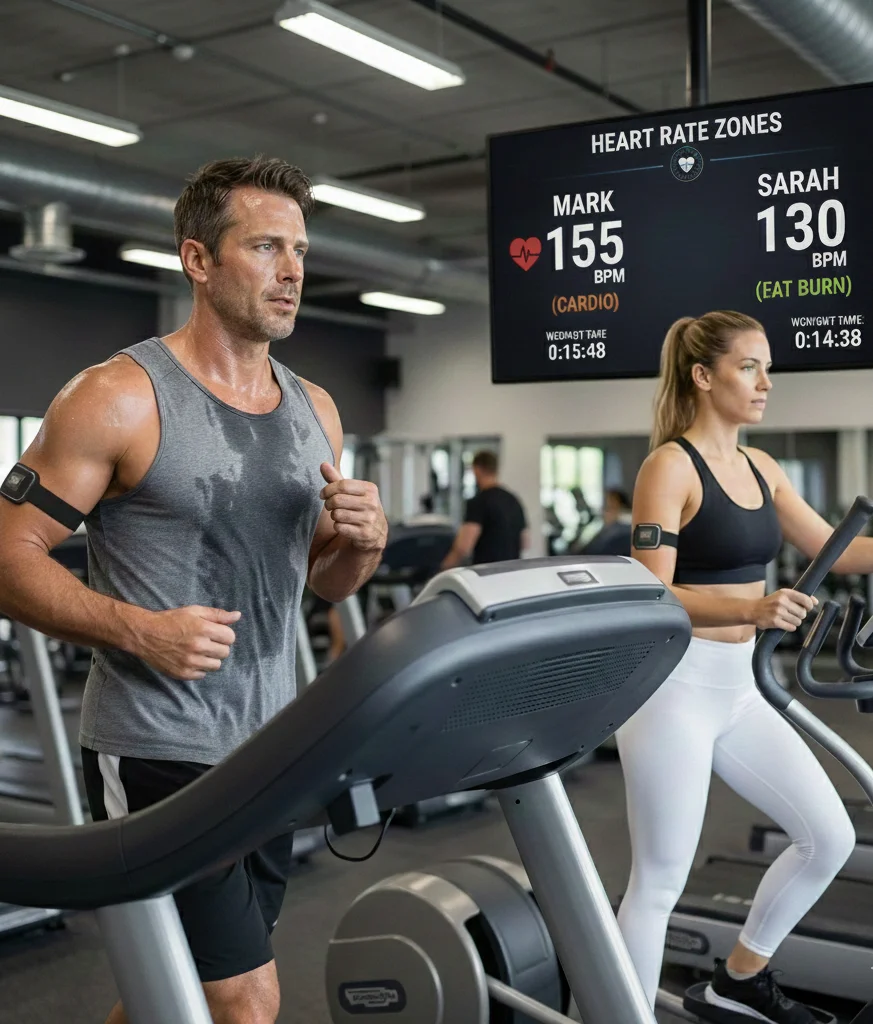
Connecting Your HRM in the Gym
Once your heart rate monitor is worn correctly, modern systems handle the rest automatically. Platforms like Fit Viz detect signals via ANT+ or Bluetooth as soon as you enter the studio.
Your heart rate data appears instantly on the main display without:
- Manual pairing
- Button presses
- App navigation
Correct placement ensures seamless connection and accurate real-time tracking during group workouts.
Common Mistakes When Wearing an HRM
To get the most out of your device, avoid these common errors:
- Wearing the strap over clothing
- Placing the sensor too low or too high
- Failing to moisten chest strap electrodes
- Wearing armbands too loosely
- Using wrist placement for optical sensors
Avoiding these mistakes is essential when learning how to wear hrm devices effectively.
Conclusion
Knowing how to wear hrm devices correctly is just as important as the technology itself. Proper placement, correct tightness, and adequate moisture are the foundation of accurate heart rate tracking.
Whether you use a chest strap or an optical armband, wearing your heart rate monitor the right way ensures reliable data, accurate training zones, and better workout results. When paired with smart gym systems like Fit Viz, correct HRM placement delivers a seamless, data-driven training experience from the moment you walk in.