Gym Scheduling Software for Multi-Location Studios
Looking for gym scheduling software for multi-location studios? Learn the multi-unit checklist - unified reporting, shared memberships, and centralized programming - and see how Fit Viz scales with a command center that manages schedules, staff, and workout displays across every location from one system.
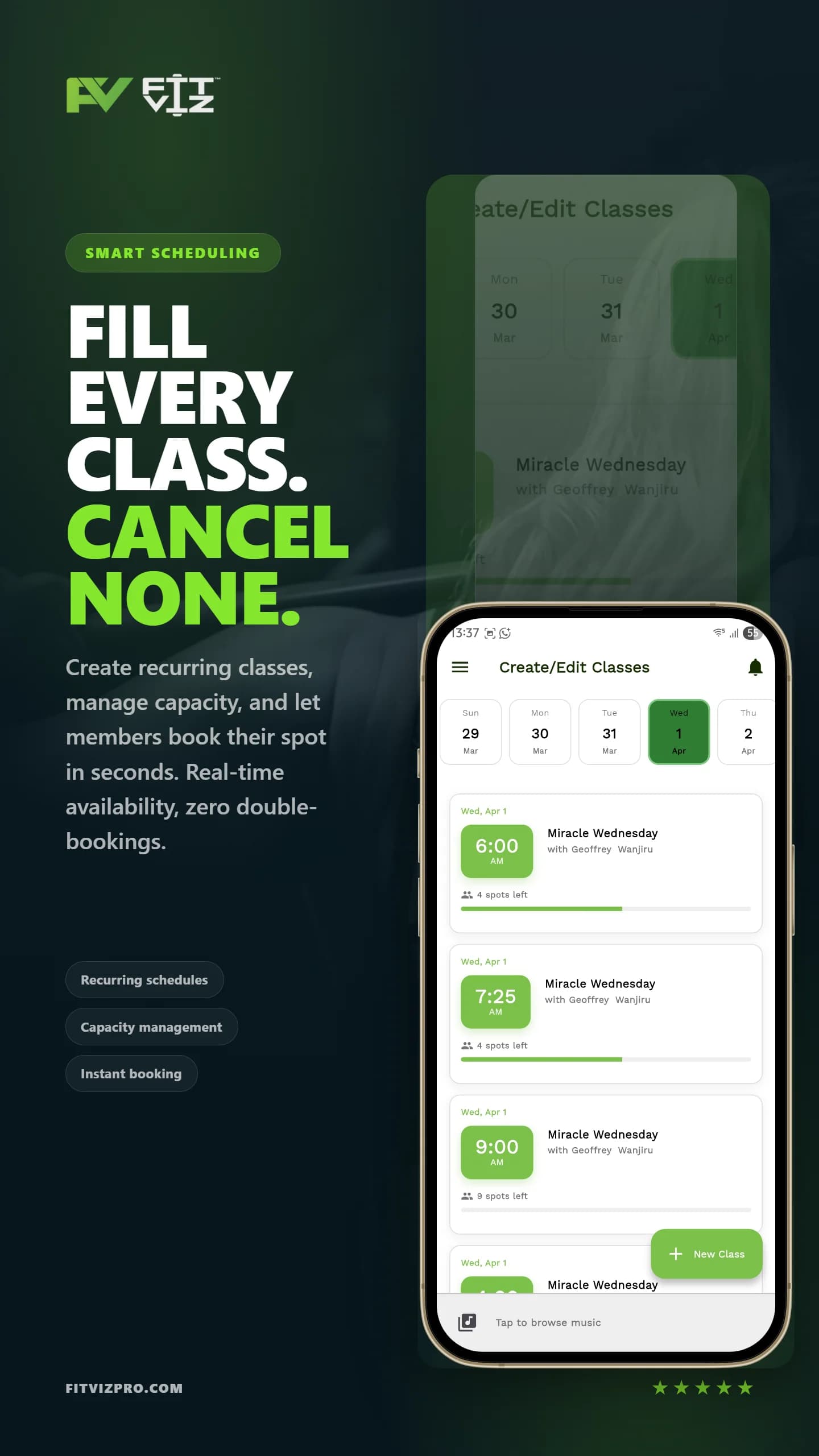
Managing one gym is a job. Managing five is an enterprise. The moment you expand beyond a single facility, your biggest risk isn’t competition - it’s inconsistency. Different schedules, different policies, different reporting views, different staff habits, and different “versions” of the brand experience.
That’s why gym scheduling software for multi-location brands must balance two needs that are often in conflict:
- Global control: consistent policies, unified reporting, standardized programming, predictable operations
- Local flexibility: each site can adjust to real demand, staffing, and community patterns without breaking the system
The key things to consider are:
- Unified reporting across locations
- Shared memberships and cross-location access
- Centralized programming that reaches every screen
- Fit Viz’s “command center” approach to managing schedules, staff, and displays from one place
Why multi-location gyms outgrow basic scheduling tools
Basic gym scheduling software can handle:
- A timetable
- Bookings
- Capacity limits
- Payments (sometimes)
But multi-location operations introduce new questions every day:
- Which location is performing best this month and why?
- Are we overstaffed at one location and understaffed at another?
- Are the same class types converting equally across sites?
- Are waitlists being used effectively or are we leaking attendance?
- Are members able to book seamlessly across locations?
- Is today’s programming consistent everywhere?
If your scheduling system can’t answer these questions quickly, you’re operating blind.
The multi-unit checklist: what gym scheduling software must do
1. Unified reporting (one dashboard, all locations)
Multi-location brands need reporting that feels like a command view, not a patchwork of exports. Your gym scheduling software should allow owners to see:
- Revenue by location and totals across the organization
- Attendance trends by class type, time slot, and instructor
- Utilization (how full classes actually are)
- Cancellations, late cancels, and no-show patterns
- Membership growth and churn indicators
Why it matters:
Unified reporting is how you make decisions at scale. Without it, each location becomes its own island and growth becomes guesswork.
Fit Viz advantage:
Fit Viz is designed for owners who want centralized visibility. The goal is to make multi-site performance measurable from one “command center” view rather than forcing managers to compile reports manually.
2. Shared memberships (members should move between locations effortlessly)
One of the biggest retention advantages of a multi-location brand is convenience. Members love options:
- Downtown after work
- Suburbs on weekends
- A location near family or travel
- A quieter studio on certain days
Your gym scheduling software should support:
- Shared membership access rules across sites
- Easy location switching in the app
- Centralized billing with location-aware attendance tracking
- Consistent policy enforcement (late cancels, pack usage, etc.)
Why it matters:
If cross-location booking feels complicated, members don’t use the benefit you’re offering. Shared memberships are a retention feature only when they’re seamless.
Fit Viz advantage:
Fit Viz supports a unified experience so members can book at different locations without needing separate accounts, separate apps, or separate payment logic. The experience should feel like one brand, not five different gyms.
3. Centralized programming (one click to publish everywhere)
Multi-location gyms win by delivering consistency. If one location has clean execution and another feels chaotic, your brand perception suffers.
A modern gym scheduling software stack should allow central programming teams to:
- Publish daily workouts to all sites
- Control what appears in each class time slot
- Handle local variations (equipment differences, class format differences) without breaking the core template
- Ensure coaches deliver the same structure everywhere
This is where scheduling and class execution merge. It’s not just about booking. It’s about what members experience when class starts.
Fit Viz advantage:
Fit Viz ties programming to in-gym displays, meaning centralized programming can be pushed to screens across locations. Owners don’t just standardize the schedule - they standardize the training floor experience.
“Global control vs local flexibility”: the balance that matters
Multi-location brands fail when they swing too far in one direction.
Too much global control creates friction
If every schedule change requires corporate approval, sites become slow and disconnected from local demand. Coaches get frustrated. Managers feel powerless. Members experience delays and mismatches.
Too much local flexibility breaks the brand
If each site runs their own rules, class naming, schedule logic, and programming delivery, the brand becomes inconsistent. Reporting becomes messy and cross-location memberships become confusing.
The best gym scheduling software supports a structure where:
- Corporate defines the framework (policies, templates, reporting standards)
- Locations adjust within the framework (class times, instructor substitutions, capacity adjustments)
Fit Viz is built around this idea: a centralized system that still respects location-level realities.
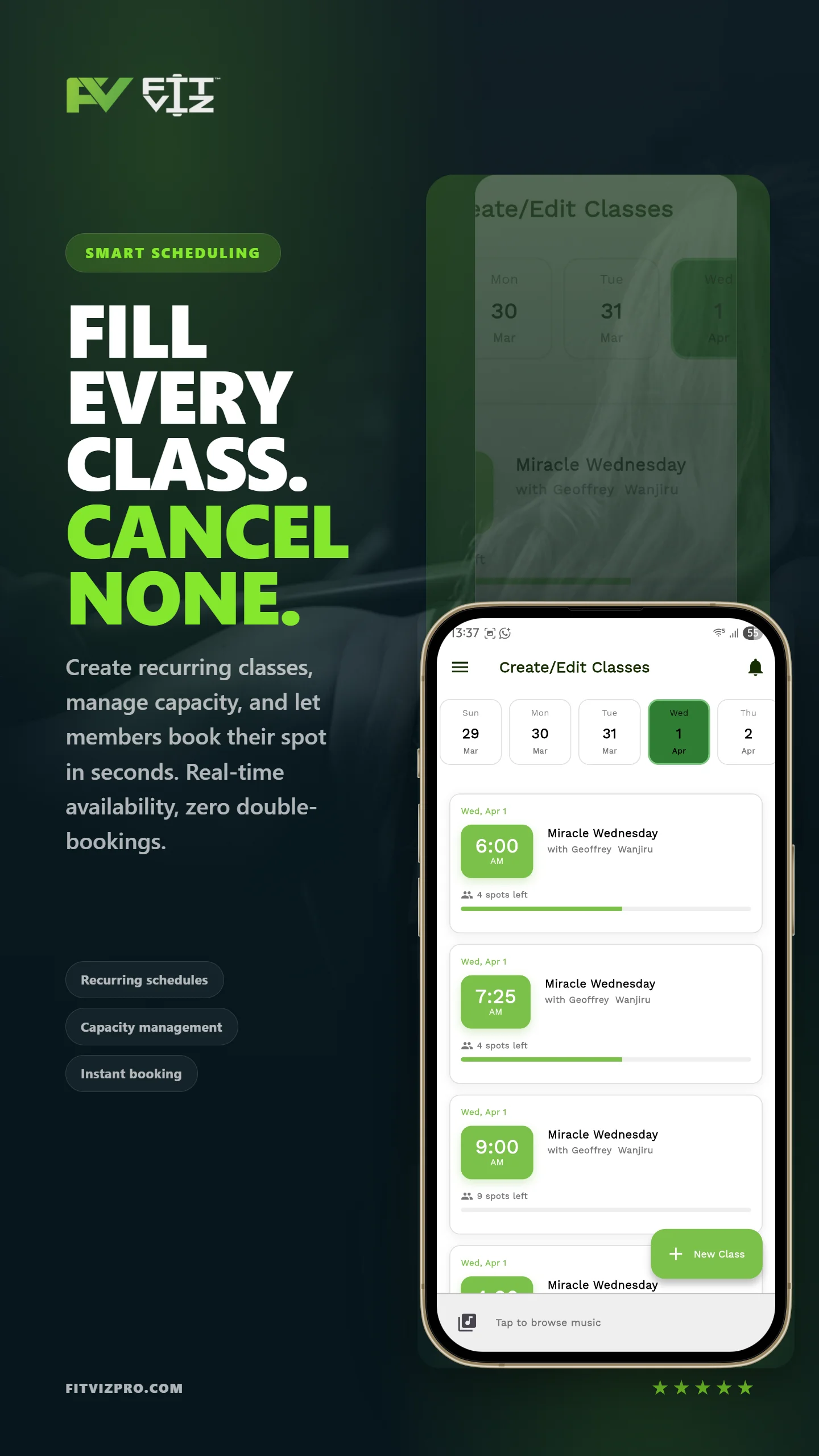
Fit Viz “Command Center”: How multi-location brands operate from one system
Fit Viz is a scalable gym OS (Gym Operating System) - scheduling, booking, operations, and in-studio execution in one ecosystem. For multi-location brands, that means:
1. Manage staff and schedules across sites
Owners and operations teams can monitor:
- Schedule coverage and instructor assignments
- Location-specific staffing patterns
- Class utilization and capacity decisions
- Fast updates when substitutions occur
2. Control programming delivery across locations
With Fit Viz, centralized programming can be distributed so every location stays aligned:
- The day’s workout appears where it should
- Centralized control of screen templates
- Class flow is consistent
- Coaches spend less time rewriting or reformatting
3. Displays as a brand consistency tool
Multi-location consistency isn’t just about what workout you program - it’s about how clearly it’s delivered.
Fit Viz’s workout display layer helps ensure that:
- Workouts are readable and structured
- Timers and transitions are consistent
- Scaling tiers can be displayed clearly
- The class experience feels premium across every site
This is how a brand feels “the same” in every city.
What to look for when choosing gym scheduling software for multi-location growth
Use this checklist during demos:
- Can I view revenue and attendance across all locations in one dashboard?
- Can members book across locations with one membership and one login?
- Can we standardize policies across locations (late cancel, waitlist rules)?
- Can corporate push programming to all sites quickly?
- Does the system support local variations without breaking reports?
- Does the platform improve the in-class experience (not just booking)?
- Can I manage operations from my phone when needed?
If the answer is “yes” only for scheduling, you may still be operating multiple disconnected businesses rather than one brand.
Conclusion
Multi-location success requires consistency without rigidity. The right gym scheduling software must deliver unified reporting, shared memberships, and centralized programming that keeps every location aligned - while still allowing local managers to adapt to demand.
Fit Viz was built to scale. With a command center approach for owners and an integrated display layer that standardizes the training floor, Fit Viz helps multi-location studios operate like one brand across every site - managing staff, schedules, and screens from a single system.